 North West Social Science Doctoral Training Partnership
Pre-registration talks – and why they’re great

Camilla Woodrow-Hill, Psychology, University of Manchester (2020 Cohort)
One hurdle many early-stage PhD students may encounter is being unable to present at conferences until later in their PhD journey due to a lack of study data. Fortunately, with the increasing awareness of open-research practices, some conferences are inviting researchers to submit pre-registration posters or talks. This means exactly what the name suggests – researchers are given the opportunity to present research that they have not pre-registered or collected data for yet. This gives researchers the valuable opportunity to present their current research plans and collect feedback from the academic community at a point when they are still able to make changes and improvements to their study design. It also increases awareness in the academic community of research that is currently in the pipeline, and reduces the chances of HARKing once data is collected for these pre-registered studies, increasing the rigor of the research. Importantly, pre-registration presentations also give early-stage PhD students the opportunity to practice presenting their work to various audiences to enhance their presentation skills – something that doesn’t come naturally to many.
Read MoreDoing archival research during a pandemic

Dmitrijs Andrejevs, Language Based Area Studies, University of Manchester (2017 cohort)
The current pandemic affected all facets of our research lives. It has reshaped our experiences of internships, friendships, research training, conferences and submission of a PhD thesis, to name just a few examples highlighted by NWSSDTP colleagues.
Drawing on my experience of archival research in Riga, Latvia (September – December 2020) as well as wider advice available on the subject, this short post highlights five broad lessons learned from doing archival research during a pandemic.
Read MorePresenting around the world: new spaces for virtual conferences
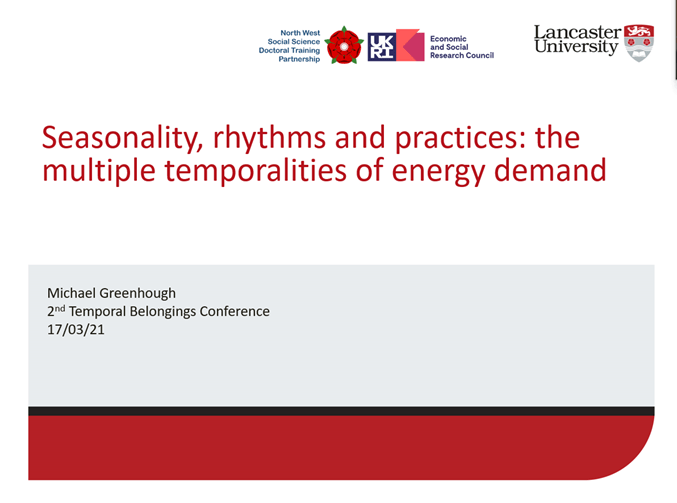
Michael Greenhough, Social Studies of Science, Technology and Medicine, Lancaster University, (2019 Cohort)
Amidst the pandemic, conference organisers have been tasked with reconfiguring the format of the academic conference to move into the virtual sphere. I have been lucky enough to present at two international conferences virtually over the past 12 months with RTSG funds. One in particular stands out when I presented at the 2nd annual Temporal Belongings conference. The conference was originally planned for 2019, however it was delayed in order to consider how the event could take place as ‘carbon neutral’ as possible. Moving the conference online was the logical solution, and the unfortunate effects of the pandemic resulted in plans not being disrupted as the online format was already being developed.
Read MoreExperience of doing online training courses

Gabrielle Humphreys, Psychology, University of Liverpool, (2019 Cohort)
Originally when lockdown hit I decided to wait it out before completing training courses. I have always learned better in person than through videos. Because of this, I debated whether an online training course would be worth their typically high prices in this format, and, I can’t lie, was a little bit miffed about the lack of a day out with complimentary biscuits and a buffet-style lunch.
Read More North West Social Science Doctoral Training Partnership