 North West Social Science Doctoral Training Partnership
Chile in/en Liverpool: Music & Memories – Música & Memorias
Richard Smith, Language Based Area Studies, University of Liverpool (2018 Cohort)
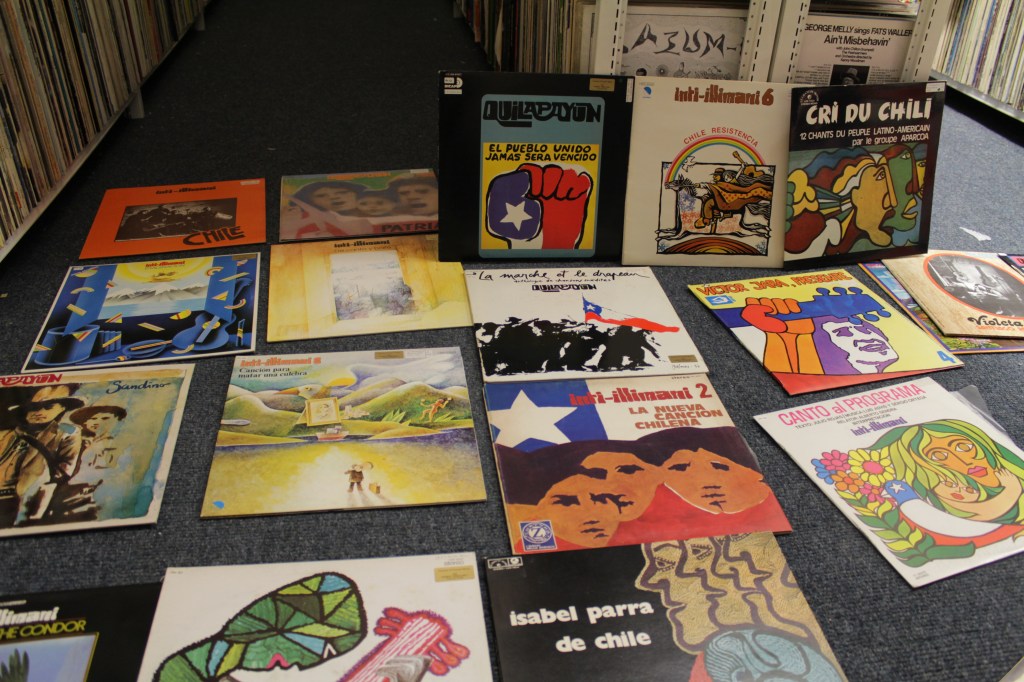
Some readers may be familiar with BBC Radio 4’s feature Inheritance Tracks, in which the great and the good talk about music they have inherited, and music they cherish. For example, Liverpool-born Alexei Sayle talked about a Bertolt Brecht song that reminded him of his autodidactic parents and their involvement in the city’s left-wing Unity Theatre, and Elvis Costello’s Shipbuilding as a supremely political song. This approach is being used by a cross-disciplinary project at the University of Liverpool that aims to explore the power of musical reminiscences to promote well-being.
Read More‘Things are swell’, I think to myself,

Joe Pearson, Psychology, Lancaster University (2019 Cohort)
‘Things are swell’, I think to myself, ‘I’m going into the final year of my PhD, I’ve a paper submitted for publication, and I’ve presented work at a couple of conferences. I’ve even tackled an entire set of cross-sectional analyses with what feels like dignity and all I have to do now is extend that longitudinally.’
Things were not swell.
Read MoreResearching the nature, organisation and control of tax abuse in professional football

Peter Duncan, Criminology, Social Policy and Social Work, University of Manchester (2020 Cohort)
My PhD research aims to understand how tax abuse in English men’s professional football is organised with a view to informing more effective and efficient control. By ‘tax abuse’ I mean any activity in which financial advantage is achieved by illicitly withholding taxes from the state. Tax abuse may be perpetrated by individual or corporate taxpayers and may come in various forms, including activities which are frequently referred to as ‘tax evasion’, ‘tax avoidance’ or ‘aggressive tax planning’. Tax abuse is therefore only sometimes a crime. At other times tax abuse might only constitute a civil infraction – such as tax avoidance schemes that can be counteracted and sanctioned via the UK’s General Anti-Abuse Rule – whilst others might not represent any formalised wrongdoing despite being socially harmful and morally questionable.
Read MoreThe impact of retail brands on their customer facing employees
Julia Marcet-Alonso, Business & Management, University of Liverpool (2019 Cohort)
Hi everyone! I’m Julia Marcet-Alonso, PhD student at the Management School of the University of Liverpool. I’ve just finished my second year and it has been a great adventure 😊
My research seeks to study the impact of retail brands on their customer facing employees. I am trying to listen to both sides of the story by analysing what companies say and what employees perceive and experience. This project is inspired by my previous experience working in fashion retail as a visual merchandiser.
Read More
