 North West Social Science Doctoral Training Partnership
Time Off and a Ferry ‘Cross The Mersey

Ronnie Hughes, Sociology, University of Liverpool, (2018 Cohort)
I don’t know about you, but as a post graduate well into his thesis it’s far too easy, tempting and can often feel as if it’s required for me to work all the time. To begin each morning with planning my reading, writing and research for the day. Reviewing how far I haven’t got by the evening and promising myself I’ll do better tomorrow when the cycle of the PGR day begins again. Sound familiar? Well let yourself off, because right now it’s still just about summertime and PGRs, students generally, need a break as much as anyone.
Read MoreThe ‘Thinking Cap’ Workshop: A Collaboration of Heads, Hats and Crafts

Camilla Woodrow-Hill, Psychology, University of Manchester (2020 Cohort)
Have you ever thought about what neuroscience, hats, health and creativity have in common? On starting my PhD in September I signed up to be a Widening Participation Fellow for the University of Manchester. This role meant communicating science and research to school children of varying ages, focusing in particular on those considered to be in ‘widening participation’ areas. This means focusing on students from groups that are currently under-represented as students at the University of Manchester. More information on this can be found here: https://www.manchester.ac.uk/discover/social-responsibility/social-inclusion/widening-participation/
Read MoreAttending A Conference in Times of Change

Ian Winstanley, Sociology, University of Liverpool (2017 Cohort)
In light of the current impacts of rapid technological changes in so many industries, social researchers are being encouraged not only to think about how they might contribute to academic debates on these developments but also to think about how their research might address the practical concerns of people working in the industries that are being shaped by technological innovations. In the “ESRC research helping industry” document, for instance, the ESRC refers to the need for social science research that develops insights into how work is changing in the creative and cultural industries in the context of transformative digital technologies. In responding to this need through my PhD research, I’m always keen to find opportunities to learn more about the experiences of people who are dealing with technological changes in their working lives, and I’d like to share my experience of one such learning opportunity in this blog post.
Read More‘In the moment’ with music – reflections on my CASE studentship experience with Manchester Camerata
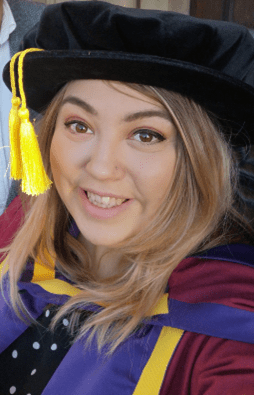
Robyn Dowlen, Health & Wellbeing, University of Manchester (2015 Cohort)
Dr Robyn Dowlen is a postdoctoral research associate at the Centre for Cultural Value, University of Leeds. Robyn was awarded an ESRC CASE studentship (2015-2019) through the North West Doctoral Centre (now North West Social Science Doctoral Training Partnership) which focussed on understanding the ‘in the moment’ experiences of people living with dementia when they take part in improvised music making. Robyn’s industry partner was Manchester Camerata, an orchestra based in Manchester, who have a well-established music programme for people living with dementia and their family carers – Music in Mind
Read More
