 North West Social Science Doctoral Training Partnership
Overseas Institutional Visit to University of New South Wales, Sydney
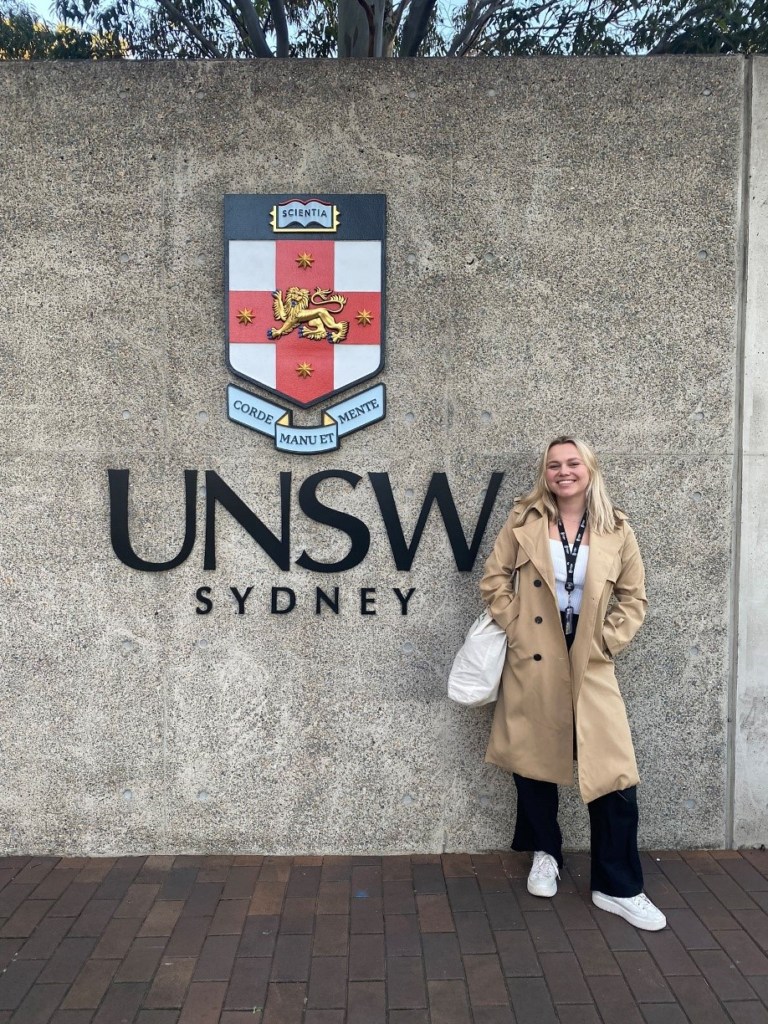
Olivia Fletcher, Geography and Environment, University of Liverpool (2020 Cohort)
Throughout my PhD, I had limited in-person networking opportunities because of the COVID-19 pandemic. When I reached the third year of my PhD I wanted to take the opportunity to visit an overseas institution. I decided to visit Professor Deborah Lupton at the Vitalities Lab, UNSW for four weeks. Deborah’s work has had a significant influence throughout my PhD, which focuses on young people’s use of health-tracking technologies. Deborah leads the Vitalities Lab, which brings together researchers working on understanding human experience in the context of the more-than-human worlds and their research includes critical digital health studies, living digital data, digital food cultures and innovative social research methods.
Read MoreMy First Conference Experience
Rosanna Maletta, Psychology, University of Liverpool (2021 Cohort)
As I began the second year of my NWSSDTP funded PhD at the University of Liverpool, I started to think about attending conferences to disseminate my initial findings. My PhD focuses on discrimination, disadvantage, and mental health in the UK, and it makes use of secondary datasets. When looking into which conference to attend, I thought it would be valuable to attend one linked to a dataset I use. So, earlier this year I sent an abstract to the Understanding Society conference, which provides an opportunity to share work using this dataset. I was happy to find out I was accepted to give an oral presentation. After registering for the conference, and booking my travel and accommodation, I began to think about what I should expect from my first conference experience. I spoke to other PhD students and academics about their experiences. Their positive stories reduced some of my nerves about presenting my research. However, unlike many of my colleagues’ experiences, I was travelling to this conference independently and I did not know anyone else who was attending. This made me apprehensive, as I knew I would have to go out of my comfort zone to meet others.
Read MoreManchester welcomes international early-career researchers for inaugural white-collar crime workshop

Diana Bociga, CSPSW, University of Manchester (2021 Cohort)
In July 2023, we had the privilege of hosting an interdisciplinary workshop at The University of Manchester, focusing on the field of white-collar crime, corporate crime, and organizational crime. This workshop provided early career researchers with an invaluable opportunity to present their research, receive targeted feedback, and establish professional connections.
Read MoreA trip down memory lane: giving a talk at your alma mater.
Lois Fairclough, Linguistics, Lancaster University (2020 Cohort)
Earlier this year, I was copied into an email communication from a college looking for a member of the Linguistics and English Language department at Lancaster to give a talk on forensic linguistics. As my PhD topic is in forensic phonetics, this topic is also an interest of mine, which I did modules in during my undergraduate and master’s degree. When I looked at where the original email was sent from, I realised it was sent from my old college, where I attended between 2015-2017. Not only this, but the email was from my old A-Level English Language teacher! As soon as I realised, I emailed back to say I would love to do the talk. For me, college was where my passion for English Language and Linguistics started, so I was hoping I could give some inspiration to current students who are considering it as a university option, while enlightening them on how much of a broad and exciting area of study it is.
Read More North West Social Science Doctoral Training Partnership