 North West Social Science Doctoral Training Partnership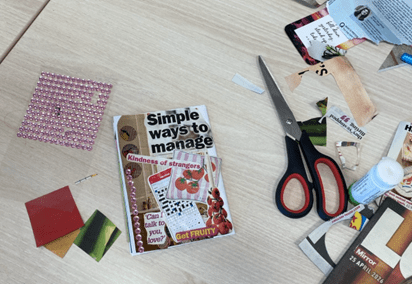
Jessica Walsmsley, SSSTM, University of Manchester (2025 cohort)
Louis Tomlinson’s music has never felt so relevant. Since the days of One Direction, I hadn’t paid much attention to the solo artist’s work, but hearing his recent song, “Imposter,” made me reflect on how I’ve been feeling as I come to the end of the first year of my PhD. My friends laughed when I drew the comparison, but imposter syndrome was something I had heard about without ever imagining I would experience it myself.
As the first person in my family to attend university, let alone begin a PhD, it has been both a daunting and exhilarating academic journey. I have spent years explaining to my mum, who sees higher education as a completely different world, the difference between a 2:1 and a 2:2, or why referencing takes so much time. Throughout it all, she has been my biggest supporter, encouraging me to keep going and reminding me how proud she is. Similarly, from day one, at our first meeting with the NWSSDTP, we are told that being selected for a funded PhD is an achievement. Competition is fierce, and we are reminded that we deserve our place.
Whilst undertaking a PhD is a challenge in itself, the topic you choose can shape your experience of the process. My research focuses on the UK asylum system, one of the most contested issues in contemporary British politics. It is constantly present in media headlines and political debate. Researching such a complex and politically charged topic can sometimes feel overwhelming. I often find myself wondering what difference my research can really make, whether I am the right person to conduct it, or whether my work is insignificant compared to the louder voices that dominate public discussions on migration.
With those feelings in mind, I was excited to attend the recent Zine workshop, led by Inspire Women Oldham and Dr Poppy Budworth, which focused on tackling imposter syndrome and was funded by the NWSSDTP. Academia often encourages us to respond to challenges through writing, reading, and critical analysis. Whilst these are valuable tools, they can sometimes leave little space for creative reflection on how we are actually feeling. Zine-making offered something a little bit different. Using the colourful pens, stickers, and magazine cuttings provided by Inspire Women Oldham, we learned how to fold a zine and use collage techniques to express our experiences of imposter syndrome.
What followed was a joyous session where, after an icebreaker comparing ourselves to a biscuit (Party Ring for me!), we shared our experiences of imposter syndrome and reflected on where it had cropped up in our work As a mixed group of first- and second-years, as well as post-docs, we all had different insights and advice to share about coping with feelings of inadequacy and isolation whilst conducting doctoral research. Some of the zines focused on the feeling of always being scrutinised, with one participant using googly eyes on their zine’s cover to visualise it. Others focused on their feelings of not being the ‘right’ person to conduct their research projects, or fixating on negative feedback and discounting positive experiences.
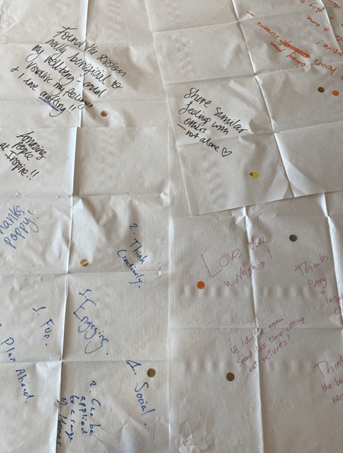
Inspire Women Oldham encouraged us to think about how we could challenge these feelings. We suggested including elements of joy and rest in our everyday lives and making notes of the small, positive interactions we have each day. It was so valuable for everyone attending to know they were not alone with their feelings. To conclude the session, we wrote about how we had found the session and any feedback on a collective tapestry. Some of the participants wrote that they enjoyed having “two hours away from a screen” and that “the principles of zine making can be applied to a range of themes”, suggesting a future focus on perfectionism.
Perhaps Louis Tomlinson was right that the impostor feeling never completely disappears. But as the workshop reminded us, feeling like an imposter does not mean you are one.
To help anyone similarly feeling the range of emotions that come with imposter syndrome, I have compiled a small playlist with songs that often help me get out of a rut and remind me of the value of my research and that I am capable of completing it.
Dr Poppy Budworth, who ran the workshop in conjunction with Inspire Women Oldham, digitalised the zines made as part of the workshop (see below) to encourage a continued conversation about imposter syndrome, to facilitate an NWSSDTP community, and to celebrate what was made. Some of these zines have blank spaces, so please download, print out, and add your own ideas!
To learn how to make a zine, download this guide on collaborative zine making produced by Inspire Women Oldham and the Methods for Change team. Page 7 of the document details how to fold the A4 paper to make our zines.

