 North West Social Science Doctoral Training Partnership
The craft of the sociologist is to relate ‘personal troubles’ to ‘public issues’[i]. Sociology is a field of study interrogating how the everyday life of individuals is bound up with wider social contexts, identities and networks. In this way sociology lends itself to the examination of an array of different topics relevant to the contemporary world. These include, for example, social inequalities of class, gender, ethnicity, age, disability, and their intersections, the dynamics of institutions such as families, schools, workplaces and organisations, the shaping of intimate relationships by cultural contexts, mobility, migration and population change, consumption and sustainability, and issues of power, protest, crisis and resistance. Sociological research challenges conventional ways of thinking through critical investigation of the world around us. It brings a range of empirical evidence and sociological theory into dialogue to re-think commonly held assumptions about social and cultural life.
Sociologists are often motivated by a desire to improve the conditions of society, and to provide perspectives on how, practically, we might bring about changes to our world. In enabling you to explore, scrutinise and interpret contemporary social developments, a Sociology PhD within the NWSSDTP will foster and hone the vital skills needed for independent thinking, research and analysis in the era of the ‘fourth industrial revolution’. The Sociology pathway is an important space in which contemporary currents in inquiry are supported, with Postgraduate Studentships and Postdoctoral Fellowships meaningfully contributing to intellectual and more broadly public debates concerning important elements of social life.
[1] C. Wright Mills, The Sociological Imagination, 1959.
Programmes eligible for NWSSDTP funding
The list below includes all Master’s programmes that are eligible for NWSSDTP funding and the typical PhD programmes that are supported under this pathway. Other PhD programmes within these universities may be considered – please reach out to the relevant Pathway Representative (see contact details below) or the NWSSDTP Office if the PhD programme you are interested in is not listed here. Please note that the NWSSDTP does not fund standalone Master’s programmes – these can only be funded as part of a Master’s + PhD Studentship.
Keele University
University of Lancashire
- MSc Social Research Methods
- PhD Sociology
Lancaster University
- MSc Criminal Justice and Social Research Methods
- MSc Criminology and Social Research Methods
- MSc Social Research
- PhD Sociology
University of Liverpool
- MRes Criminological Research
- MA Social Research Methods
- MRes Social Research
- PhD Sociology and Social Policy
- PhD Communication and Media
University of Manchester
- MSc Sociological Research
- MSc Social Network Analysis
- MSc Urban Studies
- MA Digital Media, Culture and Society
- PhD Sociology
- PhD Digital Humanities, Cultures and Media
For information on how to apply for funding, please visit our How to Apply page.
Pathway Representatives
Contact details for Sociology Pathway Representatives at each institution can be found here: https://nwssdtp.ac.uk/about/contact-us/pathway-leads/
Current Sociology Pathway Students and Alumni

Ian Winstanley (2017 Cohort)
- University of Liverpool
- Email: I.J.Winstanley@liverpool.ac.uk
- MethodsX Stream : Interview-based Qualitative Research
Constructing and transforming the ‘creative professional’: digital disruption and creative agency in the UK language industry
The relationship between digital technology and work has emerged as a key area of sociological and social policy interest. This study examines this relationship in the case of the UK language industry, a site of complex interplay between creative labour and transformative digital technologies. The research draws on Bourdieu’s theory of practice and the analysis of interviews and documents.

Abi O’Connor (2018 Cohort)
- University of Liverpool
- Weblink: https://twitter.com/abioconnor
- Email: aoconnor@liverpool.ac.uk
- MethodsX Stream: Ethnography
Stigma and the City: A Sociological Exploration of the Political Economy of Stigmatisation through a Case Study of Liverpool
This place-based study explores how stigmatisation shapes and is shaped by the urban political economy, examining various articulations of social control over time on a city-wide scale. The impacts of these historical and contemporary processes will be explored as being embedded within – and contributing to – a broader project of urban and social restructuring, intensifying under austerity.

Alice Swift (2019 Cohort)
- University of Manchester
- Email: Alice.swift-2@postgrad.manchester.ac.uk
- MethodsX Stream: Ethnography
Social reproduction infrastructure in the European climate camp movement
Climate camps have exploded across Europe mobilising thousands to take direct action against fossil fuel infrastructure. The camps create a temporary ‘home-place’ for people providing food, shelter, education and music among other provisions. This project compares the successes and limitations in how these camps are organised in different national contexts with a particular focus on the UK and Germany.

Caitlin Schmid (2018 Cohort)
- University of Manchester
- Email: caitlin.schmid@manchester.ac.uk
- MethodsX Stream: Quantitative Methods
Gender Stratification in European Welfare States
Existing gender equality indices are influential in shaping policy development, academic research and public debates on gender equality. This project evaluates their adequacy by drawing on the contributions of social reproductive analyses. Using this framework, it seeks to advance the measurement of gender equality to offer a more refined picture of its variation across Europe.

Miriam Tenquist (2019 Cohort)
- University of Manchester
- Weblink: https://www.linkedin.com/in/miriam-tenquist/
- Email: Miriam.tenquist@postgrad.manchester.ac.uk
Ageing in or out of place? Experiences of place amongst geographically dispersed ethnically minoritised older people
As the older ethnically minoritised population increases, the question of equality, belonging, and heterogeneity between places and groups becomes more relevant. This qualitative study will consider how experiences of ageing in place and cultural identity may be particularly compromised for individuals in smaller, under-represented, geographically dispersed ethnic-minority communities, specifically the older Chinese and Irish Traveller communities in the UK.

Kristian Fuzi (2019 Cohort)
- University of Manchester
- Weblink: https://twitter.com/FuziKristian
- Email: kristian.fuzi@manchester.ac.uk
Precarious Employment and Pension Planning
Speaking to individuals in insecure employment, I explore the working conditions these individuals face coupled with the wider social and cultural contexts of their lives. I apply relational sociology to understand how precarity is negotiated within the household. The project then builds an understanding of how these social, cultural, and relational contexts shape participants financial lives.

Morgan Rhys Powell (2020 Cohort)
- University of Manchester
- Weblink: mrhyspowell.com
- Email: morgan.powell@postgrad.manchester.ac.uk
- MethodsX Stream: Ethnography
Within and Against Precarisation: Forms of Mobilisation and Resistance amongst Workers in the UK’s “Gig Economy”
My research investigates the emergence and endurance of organised labour in ostensibly precarious employment. By applying participatory social movement methods to case studies of unionisation in particularly insecure workplaces, this project intervenes in recent debates over trade union decline and resurgence, the rise of non-standard employment, and conceptualisations of ‘precarity’.
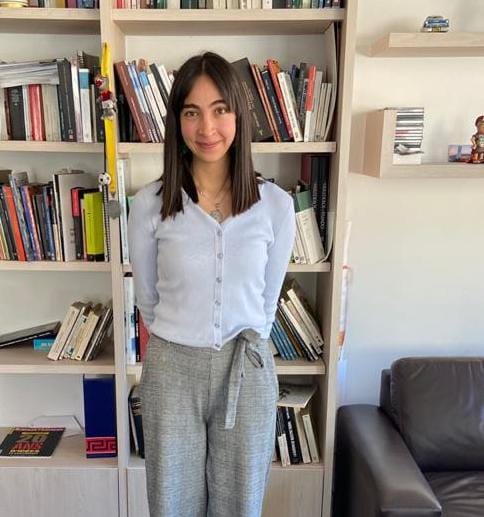
Daniela Fazio Vargas (2021 Cohort)
- University of Manchester
- Weblink: https://www.linkedin.com/in/daniela-fazio-vargas-0031441bb/
- Email: daniela.faziovargas@postgrad.manchester.ac.uk
Experiencing a Song: the Political and Aesthetic Possibilities of Art
My research explores the role played by music in protests taking the 2019 Chile uprising as the case study. I propose that, through the exploration of the aesthetic experience, it is possible to broaden the notion of politics beyond the public institutional sphere, accounting for a transformation of how demonstrators perceive and relate to themselves, others, and the world.

Aashish Karn (2023 Cohort)
- Lancaster University
- Weblink: https://www.linkedin.com/in/aashish-karn-5559831b0/
- Email: a.karn@lancaster.ac.uk
The formation of Nepalese migrant and diaspora communities in the Gulf cities of Doha and Dubai
This ethnographic study explores the formation of Nepalese migrant and diaspora communities in Doha and Dubai. Focusing on intra-ethnic groupings, caste, and social hierarchies, it examines how migrants navigate life in the Gulf through transnational networks and shared identities. The project moves beyond narratives of exploitation to investigate belonging, sociality, and support systems among Nepalese migrants.
 North West Social Science Doctoral Training Partnership