 North West Social Science Doctoral Training Partnership
DataCamp’ing during Lockdown

Kaori Narita, Economics, University of Liverpool (2017 Cohort)
A few months in during the first lockdown, I finally started finding myself comfortable with the “new normal,” which is quite different from my old working environment, since I was never a working-from-home person and enjoyed the company of my colleagues in our PhD office.
Thanks to the financial support given by NWSSDTP, however, I have developed necessary skills as a quantitative researcher over the past three years of my PhD journey, and this has remained unchanged amidst the global pandemic.
Read MoreInternship at the Parliamentary Office of Science and Technology (POST)
Iqra Choudhry, Social Studies of Science, Technology and Medicine, University of Manchester (2017 Cohort)
I applied to the POST Fellowship hoping to get some hands-on policy experience. My PhD focuses on the relationship between science and policy on an international stage, so I was looking forward to an opportunity to see how policy making worked on a national scale, here in the UK.
When I was offered the internship, I was given the option to spend my time at the Parliamentary Office of Science and Technology (POST), where I would be working on a POST note over the course of my three months or, working at the House of Lords Library as a Research Assistant instead. One of the reasons I accepted a secondment to the House of Lords Library was because I wanted the chance to work on a range of projects during my time in Westminster.
Read MoreNew challenges for conference presenting: global pandemics and multiple languages
Andrea Aparicio-Castro, Social Statistics, University of Manchester, 2018 Cohort
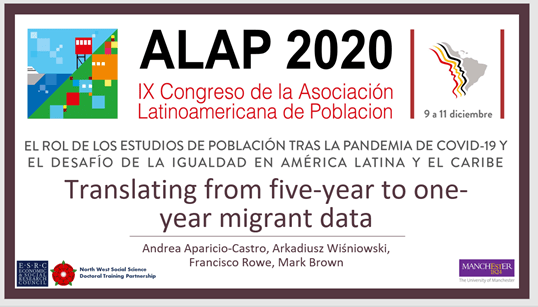
Many PhD students have been presenting online at international conferences due to the current pandemic. I was one of them last December when I had the opportunity to participate as a speaker in the International Conference of the Latin American Population Association (ALAP, by its Spanish acronym). My presentation was about translating from five-year to one-year migrant data. More than the topic of my presentation, I would like to share how this conference was a different experience for me. The ALAP conference not only encapsulated the effects of presenting a subject in the middle of a pandemic but also raised new considerations for conference presenting.
Read MoreFrom antifascism to environmental peacebuilding
Matt Hanley, Development and Humanitarianism in an Unequal World, Lancaster University, 2019 Cohort
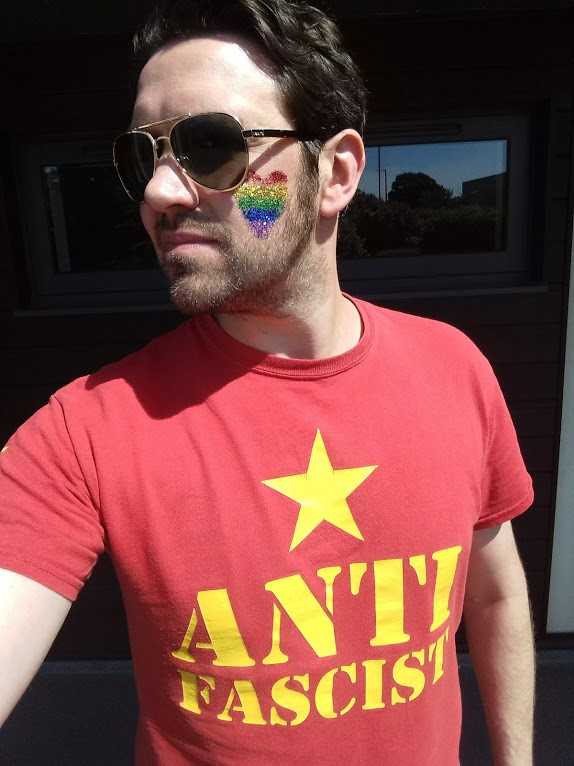
One cold winter afternoon in Berlin in 2016 I stood in solidarity with a small group of fellow antifascists, squaring up to about 3000 right-wing anti-immigrant protestors as they marched through the city’s Government quarter, chanting ‘We are the people’ and ‘Merkel must go!’. They were protesting the arrival in Germany of mostly Syrian refugees escaping the bloody civil war.
Read More
