 North West Social Science Doctoral Training Partnership
‘In the moment’ with music – reflections on my CASE studentship experience with Manchester Camerata
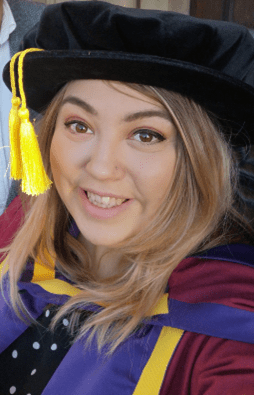
Robyn Dowlen, Health & Wellbeing, University of Manchester (2015 Cohort)
Dr Robyn Dowlen is a postdoctoral research associate at the Centre for Cultural Value, University of Leeds. Robyn was awarded an ESRC CASE studentship (2015-2019) through the North West Doctoral Centre (now North West Social Science Doctoral Training Partnership) which focussed on understanding the ‘in the moment’ experiences of people living with dementia when they take part in improvised music making. Robyn’s industry partner was Manchester Camerata, an orchestra based in Manchester, who have a well-established music programme for people living with dementia and their family carers – Music in Mind
Read More“Knowledge exchange during a year of lockdown”

Evanthia Koukouli, Social Statistics, Lancaster University (2018 Cohort)
It’s been more than a year since the first lockdown in the United Kingdom. Wearing a mask, arranging online meetings, social and academic events have now become the new standard. Although life within the university, receiving and sharing knowledge changed vastly, I am impressed by the quality of the organised online events and the unceasing effort to develop methods and techniques that make the online experience even better. A good majority of courses, seminars and conferences that I attended this year were truly amazing experiences…and of course from the comfort of my home. Fortunately, in the United Kingdom, technology was a huge part of society and education before the pandemic which makes me feel that the transition was less challenging compared to countries where the use of technology was not so popular in schools, universities and local businesses. Besides, I am still amazed to see the variety of software used for knowledge delivery and event organisation. Socio, MS Teams, Zoom, Padlet and many other software and apps could truly make knowledge exchange effortless.
Read MorePost-Grad Adventures in Lancaster

Charlotte Evans, Social and Economic History, Lancaster University (2020 Cohort)
As coronavirus restrictions began to lift (again) in March, spring melted away the last of the long locked-down winter. Lancaster’s bars and restaurants opened their gardens, and then their doors. Since moving to Lancaster to start my MA in Digital Humanities, I hadn’t had much time to properly explore the city without the various restrictions and if I were to write this blog a couple of months ago it would have been short and monotonous. We’ve all been in the same boat the last year and don’t need to read another blog about the student experience during a pandemic. So instead of zoom calls and working from home, I thought it would be nice to explore Lancaster and all that it offers now the restrictions are lifted.
Read MoreIntroduction to Oral History course
Angela Towers, Sociology, Lancaster University (2019 Cohort)
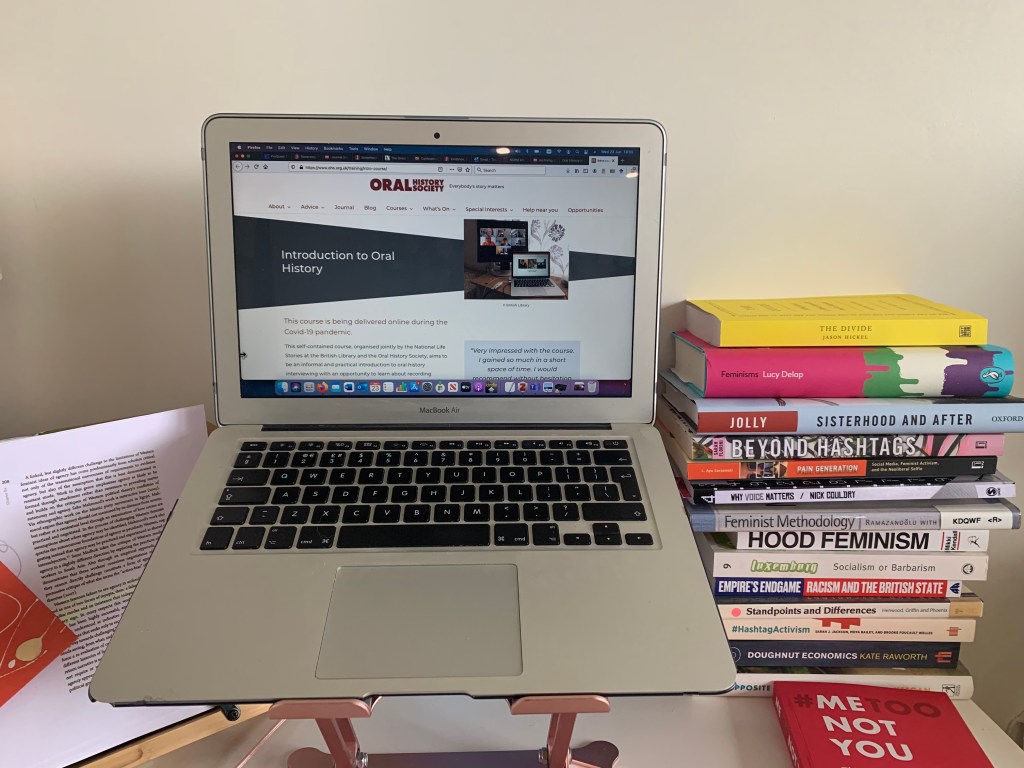
My PhD is concerned with what might be understood as the 4th wave of feminism defined by the digital spaces, and my work is focused on highly visible, or viral, campaigns and events of the last decade, and their legacies. My research questions warranted a qualitative approach, since part of what I am trying to understand are the experiences of people at the centre of these events, during and once the news cycle has moved on, and to take a snapshot of these particular moments in time and the conditions that gave rise to them. With these considerations in mind, it became apparent that an oral history approach could fit well with this project. Traditionally, and among other things, oral histories can provide different insights and evidence from a new direction, they can also give a sense of belonging to a place or time, as well as challenging myths about groups of people or social phenomena. My first stop when writing my ethics application was the Oral History Society. The website has a wealth of advice and content available, from best practice to project design, and much more. I drew heavily on their documentation and standards to put together my proposal, which was eventually signed off by my University in March.
Read More North West Social Science Doctoral Training Partnership