 North West Social Science Doctoral Training Partnership
Sun, Sea and Statistical Learning

Heather Turnbull, Psychology, University of Liverpool (2020 cohort).
The return of the Interdisciplinary Advances in Statistical Learning (IASL) conference not only was the first post-pandemic but also the first I attended as a PhD candidate. The fact it was held in the elegant seaside resort of San Sebastián on Spain’s northern coast and that the NWSSDTP Research Training Support Grant covered travel costs was an added bonus.
Read MorePlanning and Environment PGR Away Day

The Planning and Environmental (P&E) Pathway in NWSSDTP successfully held a Planning Away Day for PGRs on 20th May 2022 at Ness Botanic Garden. In total, there were 20 participants including both PGRs and staff from the University of Liverpool and University of Manchester. In addition there were four visiting PGR scholars from France, Pakistan, and India. All participants enjoyed the day and appreciated the excellent opportunity this Post-COVID event provided to get to know each other’s research and exchange ideas through various activities in a very pleasant environment. The interactive talk delivered by Professor Dave Shaw inspired the Researchers about the PhD process. Roundtable discussions offered more focused dialogue around key issues for PGRs, covering themes including post-PhD opportunities, publication strategy, and conferences/academic networking. All participants were keen to keep in touch with each other and looked forward to further activities. The PGR communities across the two institutions would like to arrange another meeting in the future, perhaps in another location.
Presenting at the Social Legal Studies Association Annual Conference
Sophia Taha, Socio-legal Studies, Keele University (2019 Cohort)
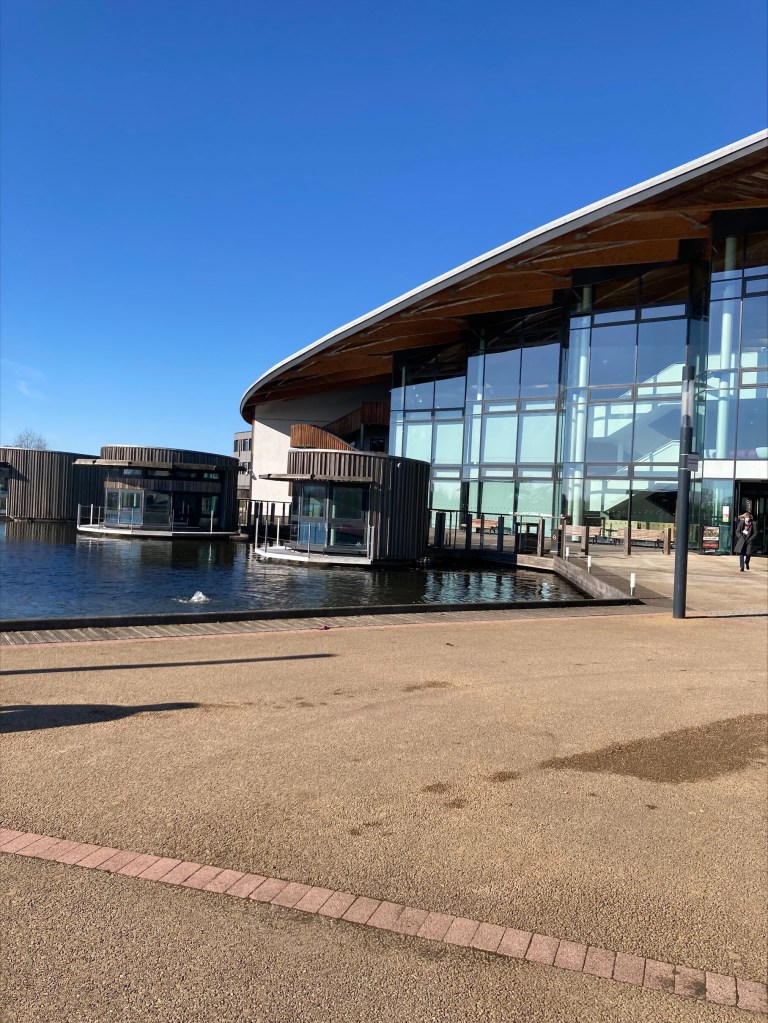
Every year since its foundation in 1990, the Social Legal Studies Association holds a conference which moves around and is hosted by different universities. This year it was hosted at York University.
As an association it has a specific aim: ‘for the public benefit to advance education and learning in the field of socio legal studies and to promote research, the useful results of which shall be published for the public benefit, teaching and the dissemination of knowledge in the field’ (source SLSA website) This is reflected in that the event is open to attendees from academia as well as practitioners working in the legal professions, third sector organisations and charities. With the ongoing impact of Covid-19 taken into consideration it was run in a hybrid format (online and in person) and this was the first time I attended. The hybrid format was perfect, not just for Covid considerations but because in-person events can be very intense, particularly if you are engaging with them and have neurodiverse needs.
Read MoreIt’s always good to reflect on the research process

Anna Sanders, Politics, University of Manchester (2016 Cohort)
Parties often target women voters with policy promises during election times. However, we know very little about which types of policies matter to women voters. As part of my doctoral thesis, I ran a set of focus groups in Greater Manchester with women voters at the 2015 election, which aimed to explore this further.
I spoke to 61 focus group participants overall. I held focus groups in two constituencies (Manchester Central and Altrincham), splitting focus groups up by age (under 35s, 35-64 and 65+). Thanks to the NWSSDTP, I was able to use my research training support grant to remunerate participants with a £10 gift voucher.
Read More
