 North West Social Science Doctoral Training Partnership
‘Collective Thought as Anti / Decolonial Practice’ Methodological Training.

Naiara Unzurrunzaga, Language Based Area Studies, University of Liverpool (2020 Cohort)
As I started my MRes programme last October, I was interested in exploring how existing Intercultural Education programmes for indigenous and other minoritized populations in Latin America, specifically in Brazil, were acting as a resistance strategy and a potential tool for decolonisation. As a former teacher myself, frustrated with my own experience on how, in my view, education systems are hugely reproducing social oppressive relations, I was interested to see how alternative initiatives of education may be addressing and challenging such logics. This was a continuation of a short project I had undertaken in the past before being offered a 1+3 NWSSDTP funding opportunity.
Read MoreAttending a one-day training course for managing challenging interviews

Daisy Harvey, Health & Wellbeing, Lancaster University (2020 Cohort)
I recently attended a one-day training course (held over two mornings) for managing challenging interviews, which was advertised through the Social Research Association (SRA). I’m a second year PhD researcher based in the department of health research at Lancaster University, and my PhD is looking at how people living with bipolar disorder talk about risk-taking. The SRA provide regular practical training which covers qualitative and quantitative methods as well as other research methods and techniques. The courses that the SRA provide begin at £220, although if you are a member of the SRA the courses are £165 and student membership costs £25 for a year. The course that I attended was delivered by Jane Kerr who is a senior researcher at the NatCen social research organisation.
Read MoreAttending the Royal Statistical Society (RSS) conference
Alex Welsh, Social Statistics, Lancaster University (2019 Cohort)
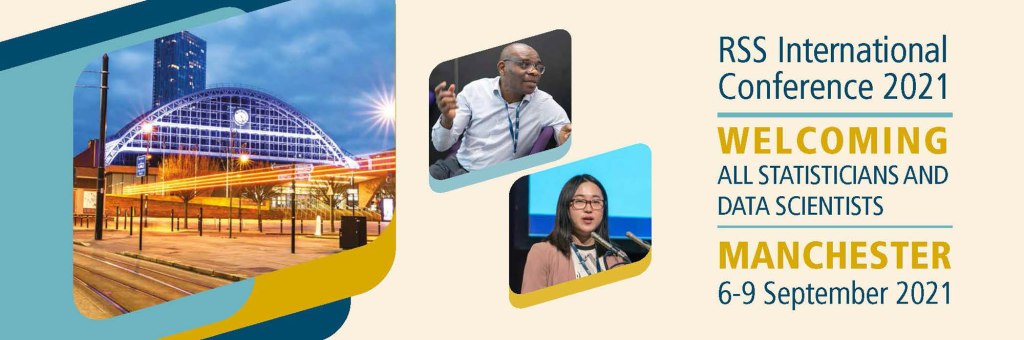
In September, I went to a conference. In a normal year, this wouldn’t be a particularly unusual development, but it’s 2021, 18-months after the start of lockdown part I, and this conference was IN-PERSON. The Royal Statistical Society (RSS) conference was the first not on Zoom/Teams that I’ve attended since starting my PhD two years ago. Although four days in Manchester wasn’t quite the same as a jaunt to Bilbao (the formerly planned location of another online conference I’d attended), I was excited to get out of my home office and meet new people in my field.
Read MoreAttending the Museum Association 2021 Annual Conference thanks to the Research Training Support Grant.
Marjotte Miles, Economic & Social History, University of Liverpool (2021 Cohort)
Every year, the Museum Association organises an annual conference that highlights some of the most contemporary debates in the museum sector. This year, the conference took place at the Museums of Liverpool and centred around the question – “How can museums change lives in a post-pandemic world and help society respond to the many challenges it faces?”. The program included a varied panel that discussed
topics such as climate action, queer rights, colonisation and technology.
 North West Social Science Doctoral Training Partnership