 North West Social Science Doctoral Training Partnership
It’s always good to reflect on the research process

Anna Sanders, Politics, University of Manchester (2016 Cohort)
Parties often target women voters with policy promises during election times. However, we know very little about which types of policies matter to women voters. As part of my doctoral thesis, I ran a set of focus groups in Greater Manchester with women voters at the 2015 election, which aimed to explore this further.
I spoke to 61 focus group participants overall. I held focus groups in two constituencies (Manchester Central and Altrincham), splitting focus groups up by age (under 35s, 35-64 and 65+). Thanks to the NWSSDTP, I was able to use my research training support grant to remunerate participants with a £10 gift voucher.
Read MoreStorytelling in the Thesis
Siobhan O’Neill, Politics, University of Manchester (2019 Cohort)
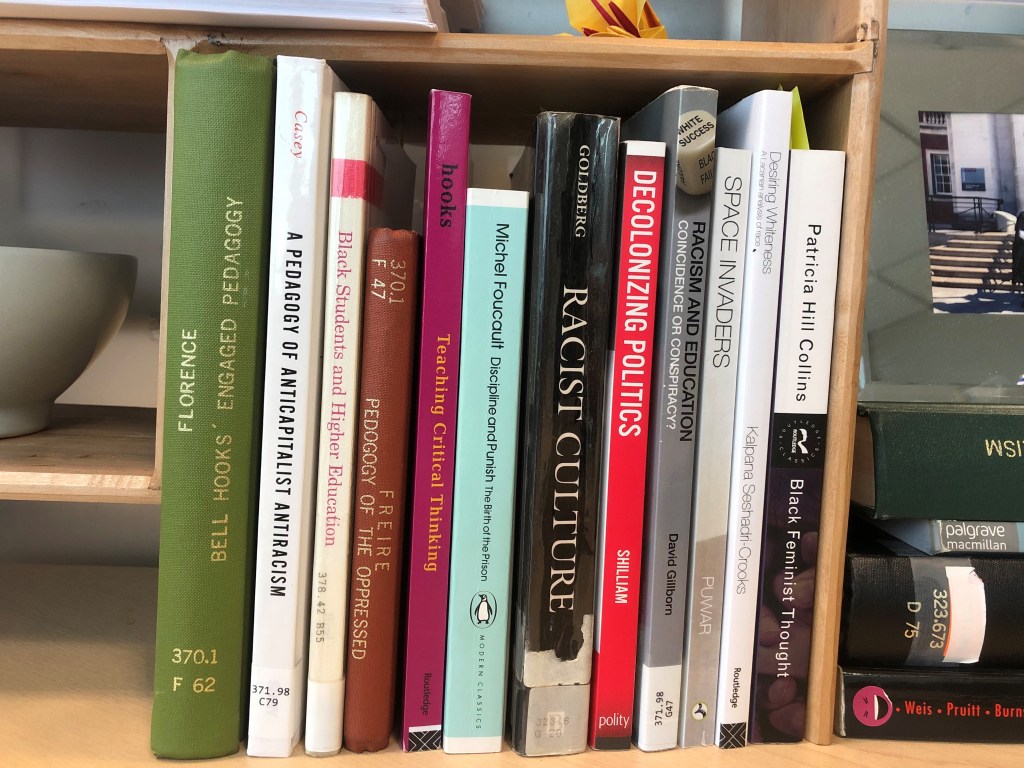
My PhD project –The Dynamics of Race, Racism and Whiteness in Politics: How do racially minoritised students experience and navigate the whiteness of Politics disciplines in British HE? – centres the experiences and narratives of racially minoritised students at British universities. The project is grounded predominantly in Critical Race Theory (CRT) as well as in Black Feminist and Decolonial thought, as such, I chose the critical race methodology of counter-story-telling to centre those experiences and narratives. As part of this, based on 30 interviews, 5 diaries and 5 follow-up diary-based interviews I conducted with racially minoritised students, I start each of my empirical-based chapters with a story. In these stories I put my participants in conversation with one another (and myself) in a setting that they might actually find themselves in as students at university. In what follows I share some of my reflections about using story-telling in my thesis as well as the rationale behind it and practicalities of the process.
Read MoreLearning from and with the others: my experience organising the PGR Sociology Conference
Daniela Fazio Vargas, Sociology, University of Manchester (2021 Cohort)
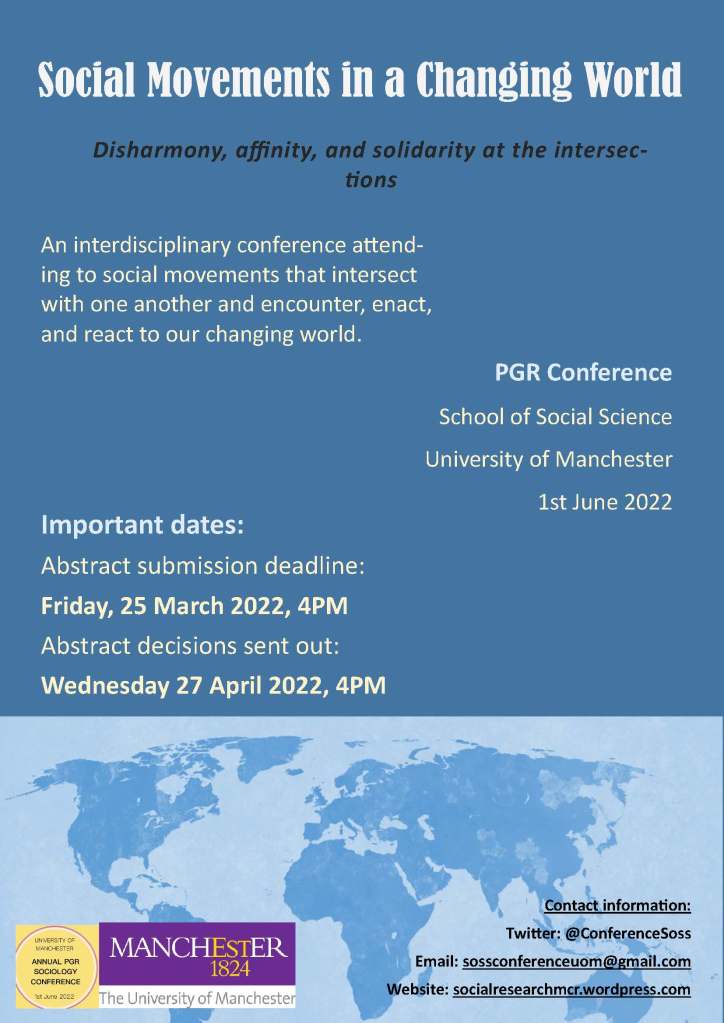
As first-year PhD students, we have repeatedly been told that starting a PhD journey is not easy. It requires us to be organised, not miss deadlines, be open to changing ideas, devote ourselves to a single topic for many years, be guided by experts in our field, and meet the most diverse students. But it is also an extraordinary opportunity to research something you are passionate about, develop skills, challenge yourself, and constantly learn from your supervisors and peers. This first year has been enriching for me as a Sociology PhD student at the University of Manchester. I consider that this has been made possible by the support I have received from the School of Social Sciences, my department, and the NWSSDTP. One of the reasons why I am eager to write this entry for the scholarship’s blog is to be part of the organising team of the PGR conference: “Social Movements in a Changing World: Disharmony, affinity, and solidarity at the intersections” (to be held online on the 1st of June).
Read MoreStaying connected through virtual writing groups

Hannah Slocombe, Geography & Environment, University of Liverpool (2019 Cohort)
With the rise in remote working as well as limits on social opportunities during the last couple of years, virtual writing groups offer a great way of working with others whilst apart.
Since I started my PhD, I have been involved in several virtual writing groups. These groups meet once a month via Zoom or Microsoft Teams and bring together students and staff in a supportive space to encourage dedicated writing time.
Typically, these writing groups begin with an informal catch-up and a discussion of each person’s goal for what they want to achieve during the day, whether it be working on a couple of paragraphs towards a chapter, transcribing an interview, or writing a conference abstract.
Read More North West Social Science Doctoral Training Partnership