 North West Social Science Doctoral Training Partnership
Sara Bellamio, Socio-legal Studies, Lancaster University (2023 Cohort)
Last March, a few months after starting the third year of my PhD, I was presenting the preliminary findings of my research at a conference in Brighton. Doing a PhD can be a lonely journey at times, and I found something incredibly inspiring in those coffee breaks and brief walks between sessions: meeting researchers from all over the world, at different stages of their careers and working on topics both close to and very different from my own. Until then, I had not seriously considered applying for an Overseas Institutional Visit (OIV). I have always valued the opportunity to study abroad: during my university years, I spent almost a year on Erasmus and another year abroad as part of a double Master’s degree. However, my PhD research is focused on the UK context, so I had never really seen how an international research stay could enrich my project. I was also worried that an OIV might take valuable time away from writing my thesis, and I was not sure how I could justify the choice to my supervisors. And, of course, there was another thought: I was already in my third year. Wasn’t it too late?
But there I was, sitting in a small conference room where at least half of the speakers were from institutions outside the UK, listening to discussions about comparative legal systems and finding myself longing, once again, to explore, learn and study in a different environment. During one of the coffee breaks, the idea became much clearer. For some time, I had discussed with my supervisors the possibility of finding new data that could allow me to explore whether my research could be replicated in other European countries. Now, for the first time, this felt like something I could actually pursue. So, I started making enquiries. I contacted my PhD supervisors, the NWSSDTP team, and my former Master’s supervisors at Pompeu Fabra University in Barcelona. The plan was to spend two months in Barcelona exploring local, national and European data on international placements of children (my research topic), learning more about research in this area abroad, and meeting researchers working on related topics. Pompeu Fabra University seemed like the ideal starting point. I already had connections there from my previous studies, and the university has internationally recognised expertise in areas such as demography and migration.
After a month of back-and-forth emails, applications and approvals, everything finally came together. On the first Monday of June, I found myself back in the university canteen where I had spent so many lunch breaks years earlier, carrying a gift bag of English biscuits and feeling slightly surreal about seeing my former supervisors again, more than seven years after graduating.
The following two months were a mixture of research, conversations and rediscovering a place that had once been such an important part of my life. I met researchers from Pompeu Fabra and other universities in Barcelona, attended seminars and shared lunches with PhD students in the department. Because I arrived during the summer, the university was understandably quieter than usual, but this also gave me the opportunity to experience academic life at a slower pace. I particularly enjoyed working in the beautiful Dipòsit de les Aigües library. Once exams had finished at the end of June, the library became a remarkably peaceful place to spend my working days. My regular online supervision meetings with my supervisors at Lancaster University also continued as planned, so I was able to keep making progress on my thesis while abroad.
The most valuable part of the experience was sharing my research on the international placement of children with academics working in Spain, answering their questions and learning from their feedback. Before the OIV, I had considered how my research might apply in other countries, but I had not fully appreciated how differences in legal and social care systems could shape the phenomenon. I came to understand that the scarcity of comparable data in Spain and other Southern European countries is not simply a matter of finding the right dataset, and that reproducing my research there would require a different approach compared to what I had originally in mind. As a third-year PhD student, gaining this perspective was extremely valuable and gave me a much clearer idea of how my research could develop internationally.
Of course, the visit was not all research. Barcelona is a wonderful city, with so much to discover both within the city and just a short train journey away. One of my favourite plans was simply getting lost among the streets of the Gothic Quarter and Gràcia after work, looking for a good tapas bar or stopping to admire yet another beautiful building. My step count regularly reached around 18,000 a day without even trying.
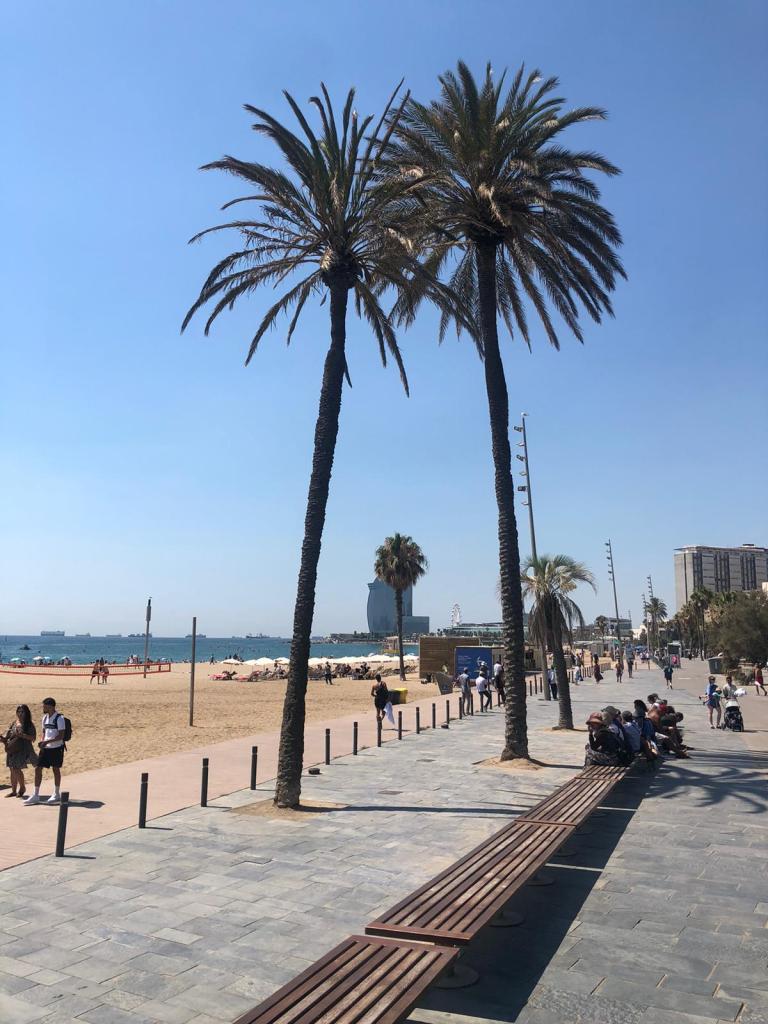
Now that I am back in England, I am incredibly grateful that I decided to take the chance. The visit allowed me to strengthen old connections, build new ones, receive valuable feedback on my research, and, perhaps most importantly, gain a clearer perspective on where my research could go next. For other PhD researchers considering an Overseas Institutional Visit, my advice would be simple: don’t assume it is too late, or that your research has to fit neatly into an international project before you apply. Sometimes you only discover what another academic environment can offer you once you are there. I may have lost a few hours of sleep during the World Cup, with football fans from all over the world celebrating under my balcony late into the night; but watching Spain win the final while experiencing the excitement of the city was certainly a memorable way to end my stay, and I would make the same decision again without hesitation.

