 North West Social Science Doctoral Training Partnership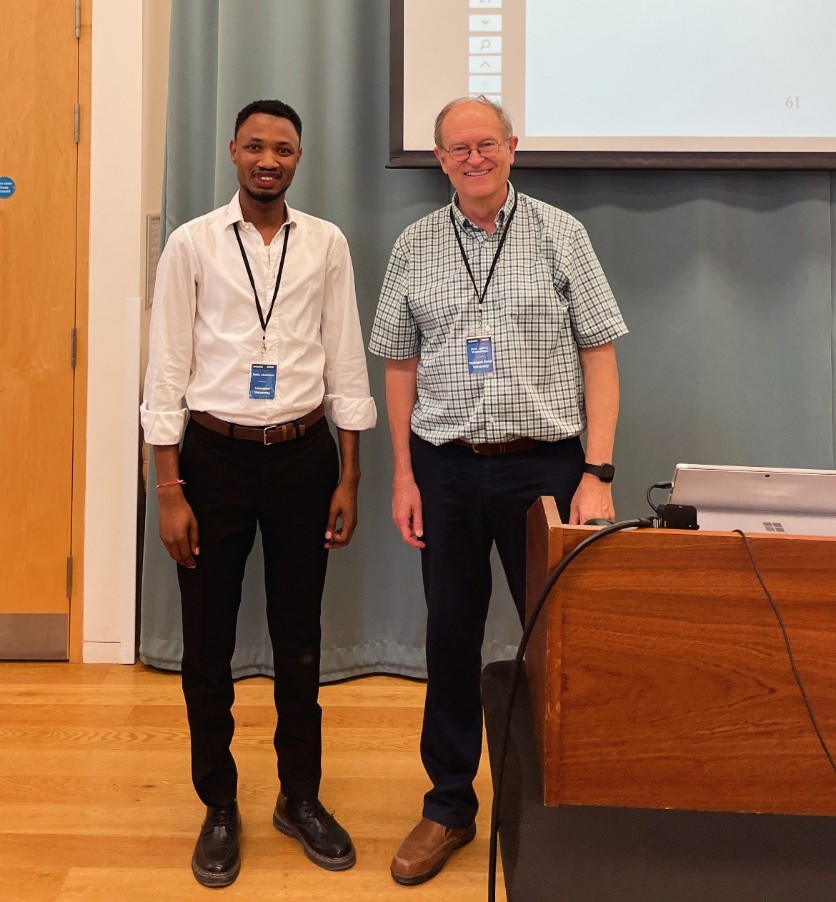
Picture with Professor Jeffery Wooldrige (Distinguished Professor of Economics at Michigan State University)
Bello Muhammad Abdullahi, Economics, Lancaster University (2025 cohort)
Last month, I spent a week at Churchill College, Cambridge, attending the Econometrics Summer School on causal inference and machine learning, taught by Professor Jeffrey Wooldridge and Dr Melvyn Weeks. I was first introduced to causal inference during my Applied Econometrics module, but as I moved further into my research, I realised that I needed to understand the methods more deeply and gain more hands-on training. I had already listed this as one of my development needs, so when my programme director shared the email about the summer school, I immediately indicated my interest in attending. And luckily, I was offered a place.
I have heard a lot about Cambridge but had never been there before, so I thought it would be a good idea to arrive early and have enough time to walk around the city before the intensity of the classes began. I booked my train in advance and decided to arrive a day before the start. The journey from Lancaster took about four and half hours, and I spent most of it reading How to Network Like a Pro, a book written by my mentor, Suraj Oyewale (Sir Jarus), and given to me by him some years back
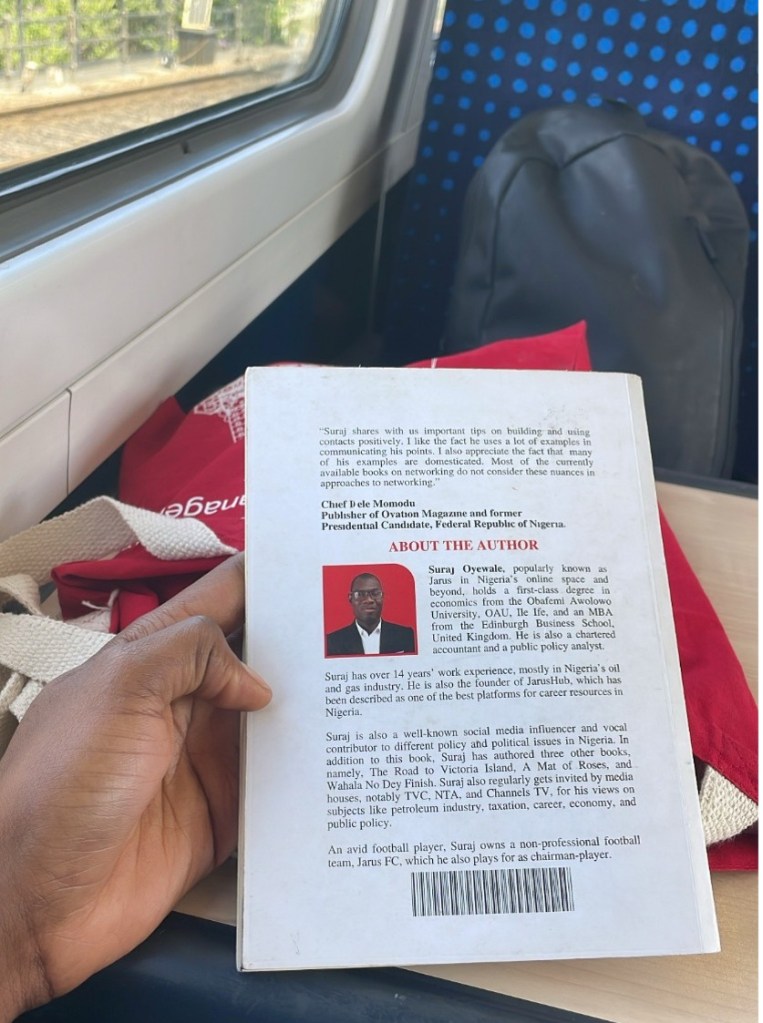
This book is aimed at early-career professionals and provides guidance on how to network effectively.
When I arrived at Cambridge train station, I still had some energy and wanted to see the city, so I walked down to Churchill College, where the summer school would be held, looking around while carrying the quiet excitement of knowing that classes would begin the next morning. The summer school was designed in two sessions: two and a half days with Professor Wooldridge, followed by another two and a half days with Dr Melvyn Weeks. For many of us, Professor Wooldridge was a name we had seen on our econometrics textbook s since our undergraduate days, so we were very excited.
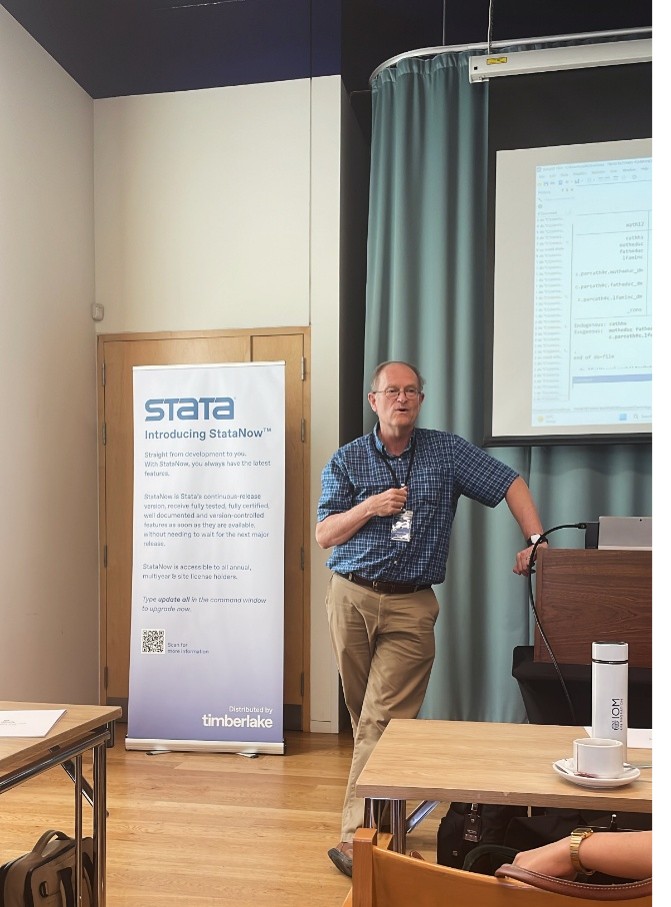
We began on Monday morning with Professor Jeffrey Wooldridge, discussing potential outcomes, identification, and regression adjustment. Later in the evenings, we had practical sessions using Stata, which helped connect the theory to empirical work and demonstrated some real examples. Over those days, we covered treatment effects and modern approaches to difference-in-differences.
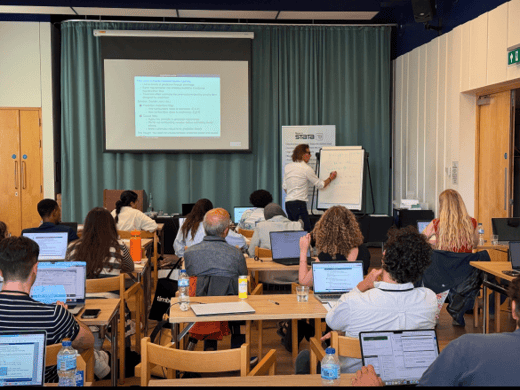
Dr Mevlyn Weeks Session on Machine Learning
Then came Dr Melvyn Weeks on machine learning. It was my first time sitting in a class where machine learning was taught in this kind of applied economics setting. Before the summer school, I had mostly thought of machine learning as something belonging to computer science. As I later came to understand, these methods have many applications in economics, and there is a large amount of literature on their use, including practical guidance by Susan Athey and Guido W. Imbens here. The session was difficult at first, and there were moments when I had to slow down and mentally regroup. But as we worked through the examples, I began to digest much more than I had expected. My takeaway from this session is that these methods are applicable even beyond economics and the broader social sciences. For those who might be interested, it may be worth looking at the links below to see how relevant these methods could be to your research or work. I also came across a paper published in the Annual Review of Sociology, “Machine Learning for Sociology”. Something to look at for those in the field of sociology.
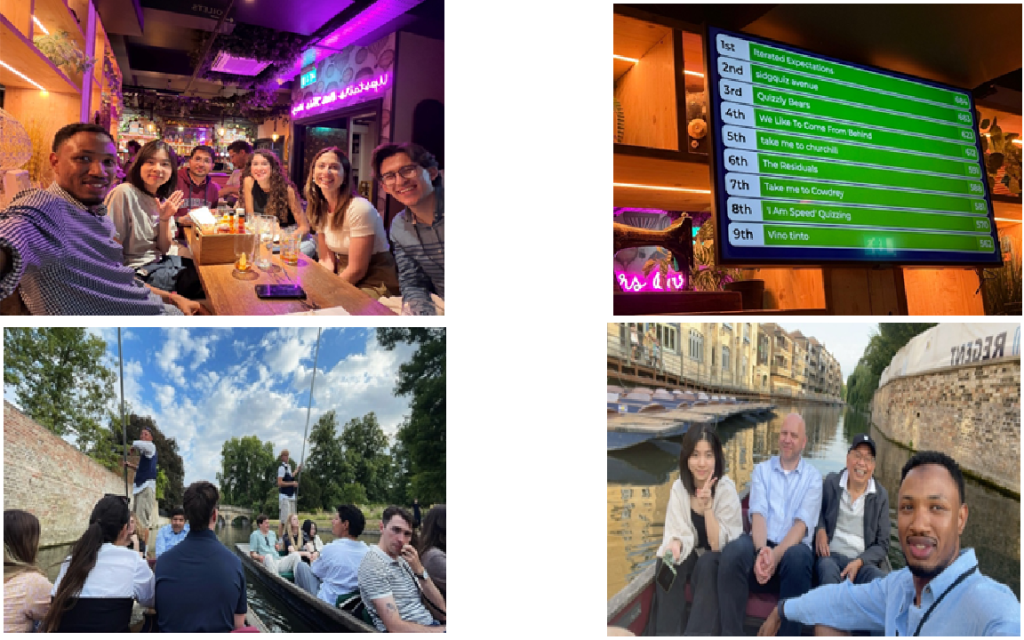
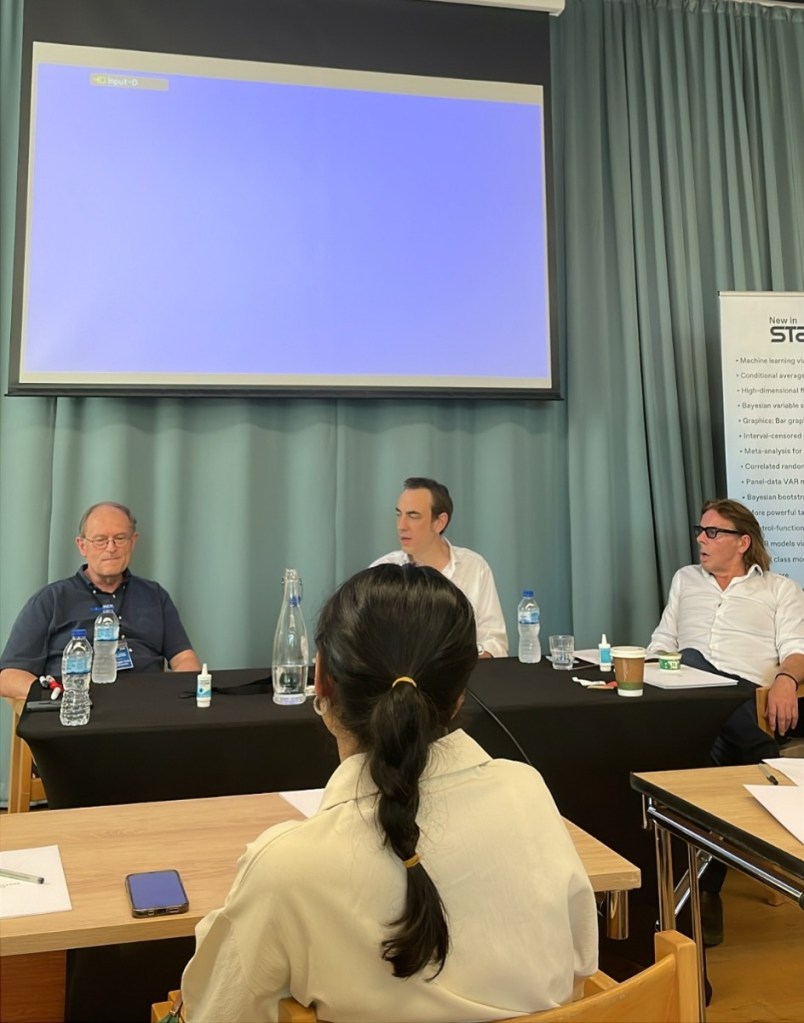
Panel Session with Jeff, Melvyn, and David
For me, one of the highlights of the summer school was an evening panel with Jeff, Melvyn, and David. It was more like an informal Q&A session, where we asked them questions about research, academic life, and their own experiences as both students and scholars. We were given the chance to send our questions in advance, which gave us time to prepare. As many of us are early-career researchers, almost all of our questions circled around the uncertainty of the PhD journey: how to know whether an idea is good enough, how to deal with slow progress, how to stay confident when the research journey feels messy, and how to navigate the intricacies of the publishing process, among other things. When a question was asked, each of them responded from their own perspective and experience, and the discussion lasted longer than planned. It was reassuring to hear them speak openly about many of these challenges and to be reminded that good research rarely follows a perfectly tidy route. I think two or three people specifically asked for advice for early-career researchers, and among the pieces of advice shared, this was the one I noted down from one of the panellists.
“Stay focused on the research, but do not be afraid to experiment. Talk to people about your work whenever you have the chance, especially when you are stuck on a problem. You may be surprised by how one comment, one question, or one piece of advice can shift the direction of your thinking.”
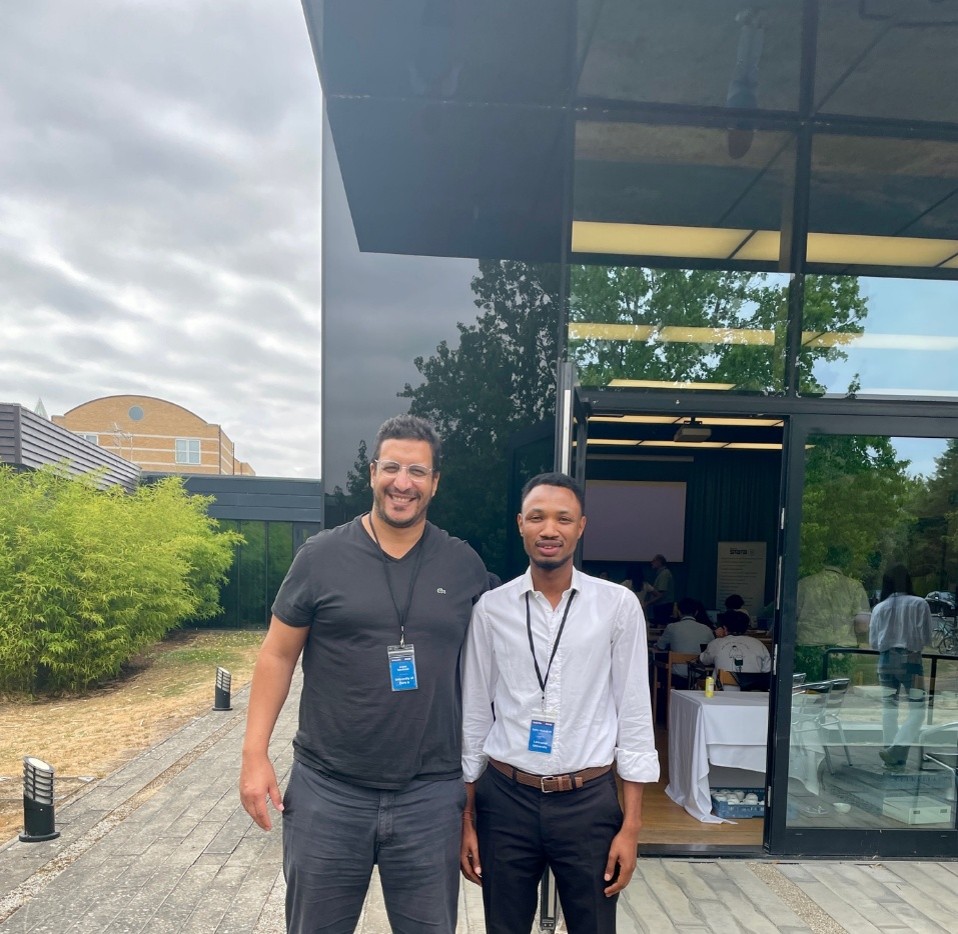
Picture with Jamel Saadaoui (Professor of Economics at Paris 8 University, France)
It was also a pleasure to meet and connect with other researchers from universities around the world. I was also fortunate to meet Professor Jamel Saadaoui, who was attending the summer school. I have followed his EconMacro blog for a while, and it has always been a useful resource. He writes frequently about developments in empirical macroeconomics, including guides on how to implement them in Stata (if this is your area, you may also want to check.
Some helpful links and materials:
Website on Machine Learning for Economists: contains materials and lecture notes.
Website on Causal Inference by Scott Cunningham contains almost everything about causal inference, including a web version of his textbook, Causal Inference: The Mixtape, teaching slides, and a repository with code.
 North West Social Science Doctoral Training Partnership