 North West Social Science Doctoral Training Partnership
Nay Myo Htet, Educational Research, University of Manchester (2021 Cohort)
Researching in complex, political environments pose unpredictable challenges for PhD researchers and academics in the humanities. My recent experience in Mae Sot, a border town between Myanmar and Thailand, offers some insights into navigating such challenging terrains. This blog post aims to share my journey of conducting fieldwork in a political hotspot, focusing on three crucial aspects: accessing vulnerable participants and working with gatekeepers, adapting research methods to fit participants’ circumstances, and managing ethical challenges.
Mae Sot: a politically complex town
Mae Sot, a border town between Thailand and Myanmar, is often referred to as a “Burmese town” due to its large Myanmar migrant population. Mae Sot is a hub of constant movement and precarious living conditions for Myanmar migrants, especially the undocumented. Thailand’s policy towards migrants creates a paradoxical situation where short-term visas are offered, but full protection remains elusive, resulting in arbitrary persecution of migrants. The situation was particularly tense in recent years with many Myanmar citizens fleeing the military coup in Myanmar.
During the fieldwork from March to May 2024, the target population of the study, 18 to 25-year-old Myanmar youth refugees and migrants, faced increased risks in Mae Sot due to heightened monitoring of young Myanmar adults as many were fleeing military conscription. For these youths, Mae sot is a place of vulnerability due to arrest and, exploitation, yet a place of a short-term escape from conflicts or a place of possibility for restarting their futures. A network of local, national, and international organisations working in Thai-Myanmar border is based in Mae Sot, offering humanitarian, and livelihoods support in both sides of the border. Against this challenging backdrop, I was keen to explore how Myanmar migrant youths creatively navigate available learning opportunities to build meaningful lives.
Accessing Vulnerable Participants: Identifying and Working with Gatekeepers
One of the most significant challenges I faced was gaining access to the vulnerable refugee and migrant participants. Here, I describe my journey in securing gatekeepers so researchers in similar contexts may find useful.
Though I am a Myanmar national and speak the national language, Burmese, I was still an outsider to Burmese organisations in Mae Sot and Thai-Myanmar border. In the first year of my PhD, I compiled a list and started reaching out a broad range of organisations that could potentially support my research. I initially planned to study young adults in both Mae Sot and nearby refugee camps. However, due to growing conflicts and increased humanitarian demands, many large organisations were unable or unwilling to collaborate. Given the complexities of accessing refugee camps and time constraints, I later decided to focus solely on Mae Sot. This early decision allowed me to streamline my efforts and adapt my research questions accordingly.
Attending conferences and networking with academics who have experience in similar contexts proved valuable. A chance meeting with a Karen academic (the majority ethnic group who lived in the camps) at a UK conference led to introductions with refugee-led organisations in the border. However, my breakthrough came during a pilot study in Sheffield, UK. Engaging with the local Karen community there led to a personal introduction to an organisation in Mae Sot, which cannot be named due to confidentiality. This experience taught me the importance of starting with local and personal connections rather than solely focusing on distant organisations. Personal, face-to-face interactions with the organisations were more effective in conveying my research ideas and potential benefits to the community than email communications with larger organisations.

Adapting Research Methods to fit participants’ circumstances
Even with careful planning, fieldwork often requires on-the-ground adaptation, regardless of how challenging the place of research may be. My experience in Mae Sot exemplifies the need for flexibility. Initially, I planned to use group storytelling and photovoice methods, followed by individual interviews with 12 youth participants, requiring 10-15 hours of commitment from each participant. However, I quickly realised this was unrealistic given the recent increased in precarious situations and mobility restrictions, e.g., increased risks of participants getting checked by the police if traveling to the workshops. Instead of group workshops, I travelled to multiple organisations to meet participants individually, in pairs, or small groups based on their preferences for time commitment and safety considerations. I also realised during fieldwork that I had access to more participants than expected. I increased the number of youth participants from 12 to 20, allowing participants more freedom in their level of involvement while still ensuring rich data collection.
I prioritised the participants needs and changed my research methods, which I believe had help me achieve the required data. Over a period of three months, I have collected 75 photo stories, 24 hours of youth interviews and 25 hours of staff interviews, achieving a rich qualitative dataset.

Navigating Ethical Considerations and Risk Management
Conducting fieldwork in politically sensitive areas requires constant attention to ethics and risk management. As a Burmese researcher, I had to adapt my appearance (e.g., dressed as a Businessman) to avoid unwanted attention from authorities. It was particularly important to me that my presence in Mae Sot do not impact the safety of both me and the participants. Many youth participants without legal status lived in semi-protected spaces like school boarding houses or youth centres. Accessing the participants required careful coordination with the gatekeepers, and the guardians of the participants from the school or youth centres and adherence to safety protocols. E.g., I arranged all the meeting in participants’ places with permission from their teachers or guardians.

It was important to me that the research participation do not burden the participants’ day-to-day lives, e.g., I let the participants chose place, date, and time of our meetings with full freedom to postpone and cancel. I ensure that the interviews questions, and storytelling workshop activities were not intrusive so that the participants felt comfortable telling me their experiences. E.g., all the interviews’ questions were strictly about their daily learning activities they value doing. As a result, youth participants were able to manage their emotions. Nevertheless, participants were reminded of available support, e.g., speaking to their teachers or guardians if they felt upset or had feedback about their participation in the project.
Engaging with some of the participants in precarious conditions was emotionally tiring. I kept a research journal to write down my thoughts and emotions to process the impact of the research on my well-being. Regular supervision during fieldwork helped me check in on my well-being and produce plans for additional support if needed by me and the participants. Social interactions with colleagues from the gatekeeper’s organisation helped me take time away from the research. I am grateful to the gatekeeper’s organisation for their incredible support towards my research and well-being.
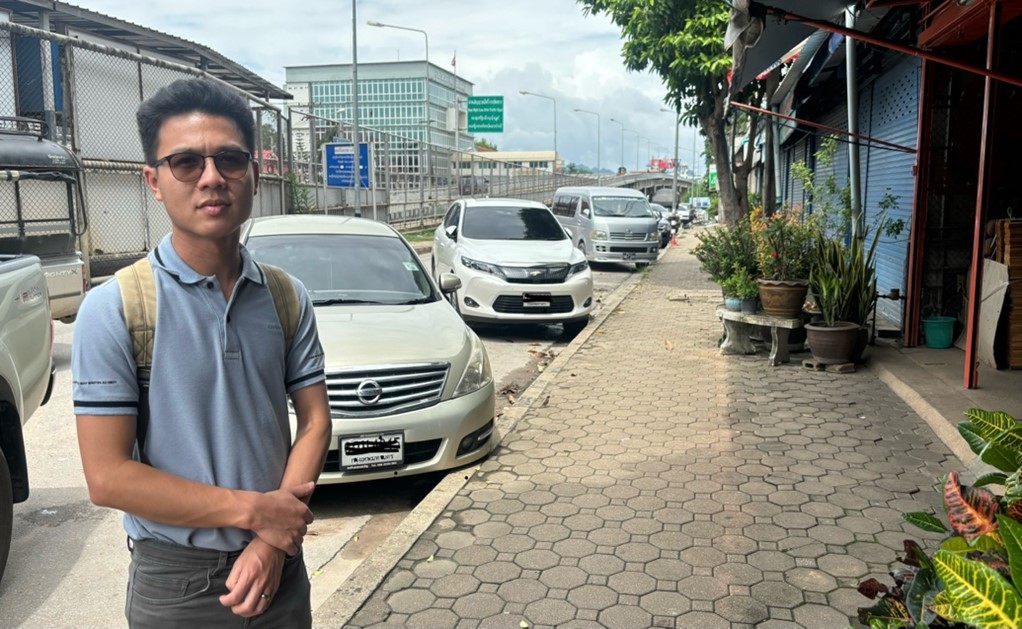
Recognising the importance of giving back to the community, I planned a return visit to Mae Sot to disseminate findings and organise a small exhibition of participants’ photo stories. Ethically, it is paramount that this research contributes to the participants’ community.
Concluding Thoughts
My fieldwork experience in Mae Sot was challenging, but it offered several key takeaways in researching in politically complex environments. By approaching the fieldwork with flexibility, cultural sensitivity, and a strong ethical framework, I was able to navigate the challenges while being successful in acquiring the data. Some lessons I learnt about the success of my fieldwork might be building strong relationships, being open to unexpectedness and remaining adaptable, and prioritising the well-being of people who are involved in my research.
Acknowledgement: The fieldwork fund from the NWSSDTP made this fieldwork possible. I am deeply grateful for all the participants, the gatekeepers, the supervisory team, my partner, the NWSSDTP and everyone who helped the fieldwork possible. Please reach out to me if you have more questions about the fieldwork.
 North West Social Science Doctoral Training Partnership