 North West Social Science Doctoral Training Partnership
The Economics Pathway offers a PhD-programme involving two years of advanced taught modules followed by either two (Lancaster and Liverpool) or three years of substantive research (Manchester). As part of the admission process, students are allocated an advisory team (usually of 2 people) with expertise in the area of study, that guides them through the PhD programme in terms of course selection and supervision of their research. Year 1 training is delivered through institutional MSc programmes. Year 2 training may involve courses offered at any of the three institutions. Entry into the programme is possible in Years 1 or 2 depending on qualifications.
Across the DTP, PhD students benefit from close research supervision, and are active members of their department’s research environment by attending weekly seminar series, research workshops and conferences. Final year PhD students are expected to present papers in their home institution’s seminar series and also have the opportunity to present their work at the other institutions in the DTP. The pathway has also established a popular annual NWSSDTP PhD Conference in Economics and runs an annual NWSSDTP Summer School in Economics. Upon completion of the PhD, graduates are expected to have acquired all necessary skills to pursue a research-driven career in academia, government, research organisations, or business.
Programmes eligible for NWSSDTP funding
The list below includes all Master’s programmes that are eligible for NWSSDTP funding and the typical PhD programmes that are supported under this pathway. Other PhD programmes within these universities may be considered – please reach out to the relevant Pathway Representative (see contact details below) or the NWSSDTP Office if the PhD programme you are interested in is not listed here. Please note that the NWSSDTP does not fund standalone Master’s programmes – these can only be funded as part of a Master’s + PhD Studentship.
Lancaster University
University of Liverpool
University of Manchester
For information on how to apply for funding, please visit our How to Apply page.
Pathway Representatives
Contact details for Educational Research Pathway Representatives can be found here: https://nwssdtp.ac.uk/about/contact-us/pathway-leads/
Current Economics Pathway Students and Alumni

Michael Grebe (2018 Cohort)
- University of Manchester
- Email: michael.grebe@postgrad.manchester.ac.uk
- MethodsX Stream: Quantitative Methods
The role of Big Data and Machine Learning in quantitative investment strategies
My research evaluates the role of Big Data and Machine Learning in quantitative investment strategies, focusing on portfolio selection and the prediction of out-of-sample directional movements of financial time series.
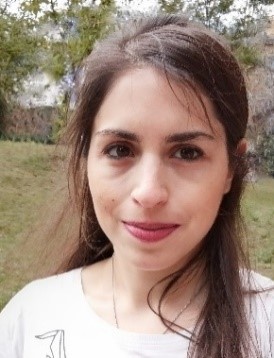
Concetta Gigante (2020 Cohort)
- University of Liverpool
- Email: Concetta.Gigante@liverpool.ac.uk
Bank Heterogeneity with Low and Negative Interest Rates
This research studies the distributional effects on banks of unconventional monetary policy such as low and negative interest rates in a context in which bank concentration and banks’ market power have been increasingly rising. In particular this research intends to advance the theoretical development of heterogeneous banks models by showing that bank heterogeneity is an important factor for the conduct of monetary policy.

Gerald McQuade (2019 Cohort)
- Lancaster University
- Weblink: https://gerrymcquade.github.io/
- Email: g.mcquade1@lancaster.ac.uk
Three essays on the short, medium, and long-run determinants of human capital in Peru
This thesis studies the relationship between early life experiences and their short, medium, and long-run effects on human capital. The first chapter explores how abnormally high rainfall in early years impacts adulthood personality; the second identifies intergenerational effects of early-life drought exposure on offspring health; and the third estimates the potential spillovers of schooling reform on untreated siblings’ short-run outcomes.

Tanisha Mittal (2023 Cohort)
- Lancaster University
- Weblink: https://www.lancaster.ac.uk/dsi/about-us/members/tanisha-t
Health and Wellbeing Profiles of Disadvantaged Population
This thesis studies health and wellbeing of disadvantaged population in the UK. The first paper discusses the wellbeing effects of using food banks, second paper explores educational aspect of children looked-after and third paper is about their transition to ‘real-life’ aiming at identifying long term health outcomes.

Jessica Botros (2023 Cohort)
- University of Liverpool
- Email: j.botros@liverpool.ac.uk
Understanding the Sources of Inequality Throughout the Earnings Distribution
My research focuses on intergenerational mobility. The first paper explores a cross-country perspective on intergenerational mobility: how disadvantage persists across generations, if economic downturns impact it, and the role of human capital. In the second paper, I will estimate the causal effect of a policy aimed at increasing the human capital of disadvantaged children on intergenerational mobility

Andrew McKendrick (2017 Cohort)
- Lancaster University
- Weblink: https://www.lancaster.ac.uk/lums/people/andrew-mckendrick
- Email: a.mckendrick@lancaster.ac.uk
- MethodsX Stream: Quantitative Methods
PhD Title: research, research, research and research
text here explaining in more detail what this PhD is about. Text here explaining in more detail what this PhD is about. Text here explaining in more detail what this PhD is about. Text here explaining in more detail what this PhD is about. Text here explaining in more detail what this PhD is about.

Kaori Narita (2017 Cohort)
- University of Liverpool
- Email: psknarit@liverpool.ac.uk
- MethodsX Stream: Quantitative Methods / New Forms of Data/Digital Methods
Exploring Managerial Decisions and Their Impacts on Firm Performance and Incentives of Workers Using Data from Professional Football
Sport economics thrives on testing labour economics theory due to analogies that exist between economic agents in these fields and quality data available in professional sport. Econometric analysis of match statistics from professional football is conducted to examine the effect of managerial decisions, such as dismissal of managers, on firm performance.

Alex Farnell (2018 Cohort)
- Lancaster University
- Weblink: https://www.lancaster.ac.uk/lums/people/alex-farnell
- Email: a.farnell@lancaster.ac.uk
- MethodsX Stream: Quantitative Methods
Labour Markets in Professional Sports
My research focuses on labour market and personnel issues in the world of professional sports. Current work is exploring the relationship between race and coaching hierarchy in the NFL, and in particular the role of the league’s Affirmative Action policy, the ‘Rooney Rule’. Subsequent work will include studying task allocation and fatigue amongst baseball pitchers.

Yigit Oezcelik (2018 Cohort)
- University of Liverpool
- Weblink: https://www.researchgate.net/profile/Yigit_Oezcelik
- Email: y.oezcelik@liverpool.ac.uk
- MethodsX Stream: Quantitative Methods
Consumer Fraud on Credence Goods Markets and Feedback Systems as a Potential Tool to Undermine Consumer Exploitation
Goods and services provided by experts are so called credence goods. As experts diagnose the problem and prescribe the treatment, they have an informational advantage. The prevalent asymmetries lead to inefficiencies and exploitation of consumers. The aim of this project is to experimentally scrutinise feedback systems and their potential to undermine fraudulent behaviour of sellers and improve consumers’ decision quality.
Katerina Deligianni (2023 Cohort)
- Lancaster University
- Weblink: https://www.lancaster.ac.uk/lums/people/katerina-deligianni
- Email: k.deligianni@lancaster.ac.uk
Technological Change and Macroeconomic Dynamics
My research interests lie in macroeconomics and environmental economics. I study how technological change, particularly in green innovation, affects the broader economy. My work aims to inform understanding of the green transition and its implications for economic policy and growth.
 North West Social Science Doctoral Training Partnership