 North West Social Science Doctoral Training Partnership
My reflection on co-organising the student representatives ‘conference themed’ event at Manchester
Sam Browning, Geography & Environment, University of Liverpool (2024 cohort)
*(Please read/listen here to the narrated version or do both based on whatever you prefer)!
Hi Folks,
Each year, the NWSSDTP rep team collaborates to create an impactful event for students across all our institution partners. In this piece, I am sharing some thoughts on co-organising last month’s (28th April) DTP’ Conference Training Day’ event at the University of Manchester, which has proved to be a huge success.
Read MoreMy Reflections on Attending the University of Liverpool’s Latest Neurodiversity Symposium (March, 2025)*
*(Please read/listen to the narrated version or do both based on whatever you prefer)!
Sam Browning, Geography & Environment, Lancaster University (2024 Cohort)
Last Month, I attended the Faculty of Health and Life Sciences Neurodiversity Symposium at the University of Liverpool, which Dr. Jenna Kenyani chaired. I want to share some reflections from what I found to be a moving and impactful day.
First, Dr. Kate Hammond’s (School of Biosciences, University of Liverpool) comments on the barriers neurodivergent students face in teaching laboratories and other learning spaces flagged the significance of forging environments attuned to a spectrum of neurologically unique needs. Dr. Hammond mentioned that neurodivergent students’ sensitivities exist around being exposed to:
- Overly brightly lit rooms.
- Sudden loud noises.
- Uncomfortable tactile/smells/temperatures.
- Non-pre-arranged group-based activities.
Other challenges discussed included, but were not limited to:
- Timetable changes and having to work in unfamiliar spaces at different times (a shock to an individual’s system or structured daily routine).
- Mandatory social communication with classmates when some neurodivergent people find such situations emotionally distressing and cognitively overwhelming.
Dr. Hammond concluded that non-neurodiverse-friendly teaching spaces are inaccessible for neurodivergent people, a conjuncture of sensory and social nightmares across many university campuses worldwide. Ableist-built and orientated classroom settings can be physically and mentally draining for neurologically unique individuals. As recommended best practice by Dr. Hammond, drawing upon the pedagogical frameworks of Dr. Raheela Awais et al in Biosciences at Liverpool, academic staff are advised to do the following to foster neuroinclusive learning environments for all students:
- Creating smaller working spaces (where logistically possible) and provide opportunities for lone-working if preferred. Reduce student numbers working in one lab or seminal room at a time to avoid overcrowding and sensory overload.
- Allowing neurodivergent students to work together if preferred. Cross-neurotype encounters, rather than internal ones, is where differences in communication and working styles usually break-down, resulting in neurodivergent people becoming detached from their work activities, spaces and colleagues.
- Offer a designated area to work in, which may be spatially distant from other classroom users, to give a sense of personal space.
- Altering lighting, room temperatures and the flexibility of learning equipment (where/when possible) will make a comfortable and accessible safe environment for everyone.
Donna Stevenson’s (Neurobox, Cambridge) presentation on celebrating neurological differences in the workplace, which partly covered the topic of authenticity, resonated with me and others in attendance online. Stevenson’s emphasis on embracing imperfectness and constructing neurologically unique social identities in inclusive spaces is a thought-provoking message. I find it inspiring to consider how authenticity can empower neurodivergent individuals to be themselves and thrive in their everyday lives. However, like Stevenson, I also appreciate that it is not always possible to be who you want to be as a neurodivergent individual. I speak from personal experience across various educational and social settings on how being your authentic self is spatially and temporally contingent.
A takeaway message from the symposium centres around neurodiversity being a spectrum of difference where neuroinclusive adaptations, support and the focus of strengths-first-deficits-second is crucial. It was pleasing to see that study skills tutoring, examination adjustments and academic advisors, for example, but not limited to, were being raised as key forms of support by the Disability Guidance Unit for neurodivergent learners on-campus.
My reflections underscore the importance of attending symposiums like this to raise awareness and foster inclusivity in environments within and outside of HEIs. Such events, particularly those related to neurodiversity, are vital in empowering diverse and neurologically unique people to develop a sense of belonging and find support where and when it matters most.
I invite everyone to take advantage of similar or different symposiums within and outside of HE to bolster our collective understanding of the importance of empowering diversity in education and society.
Overseas Institutional Visit- McGill University, Montreal, Canada
Tiegan Blackhurst, Psychology, Lancaster University (2023 Cohort)
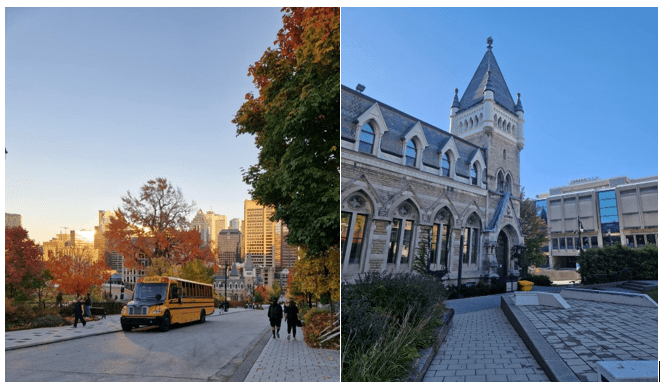
Last year I was fortunate enough to secure funding from the NWSSDTP which enabled me to visit McGill University in Montreal from October-December 2024. As a visiting scholar, I worked in Professor Victoria Talwar’s Child Development Lab and had the most fantastic time getting to know her and her research team.
Read MoreThe NWSSDTP has joined Bluesky!
The North West Social Science Doctoral Training Partnership will no longer be posting on X. We can now be found on Bluesky: https://bsky.app/profile/nwssdtp.bsky.social Our primary method of communication with NWSSDTP-funded students is always email, but do connect with us over social media for even more training and development opportunities!

 North West Social Science Doctoral Training Partnership