 North West Social Science Doctoral Training Partnership
My Difficult Language Training experience learning Mapuzugun in Buenos Aires
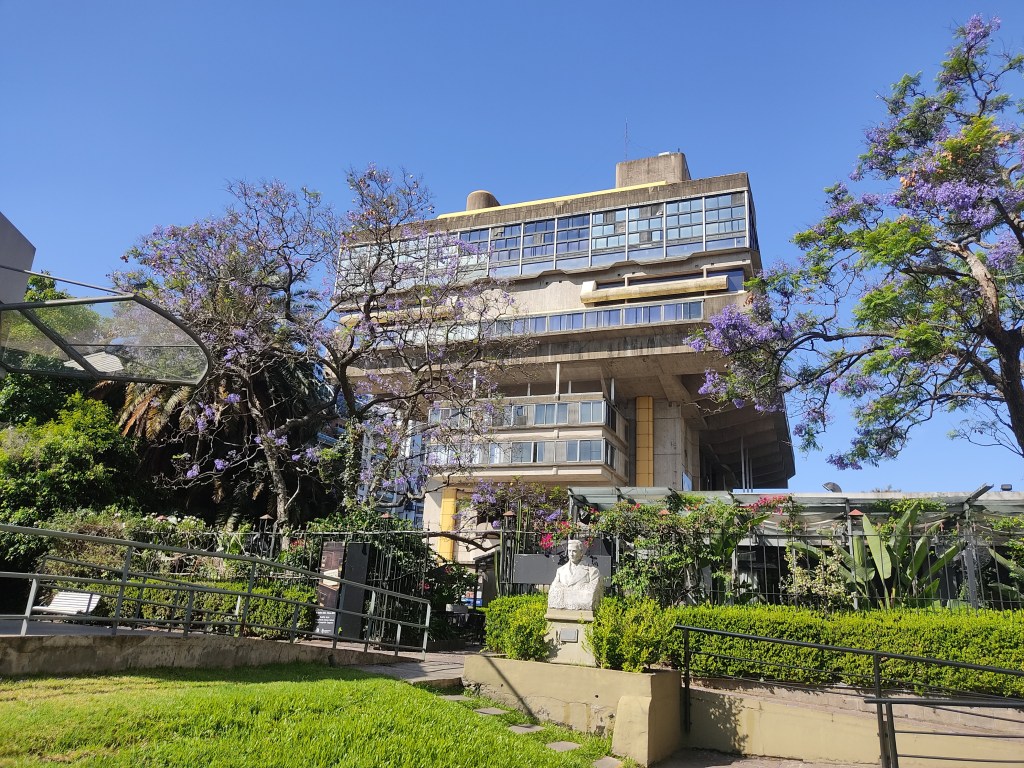
Dylan Bradbury, Language Based Area Studies, University of Manchester (2020 Cohort)
As part of fieldwork preparations in the second year of my PhD, I had the opportunity to carry out six months of Mapuzugun classes using the Difficult Language Training (DLT) funding provided by the NWSSDTP. These classes proved to have a great impact on my fieldwork, both in terms of the development of the thesis itself and in my experience researching abroad more generally.
Read MoreFieldwork in Mozambique and participation at an International Conference
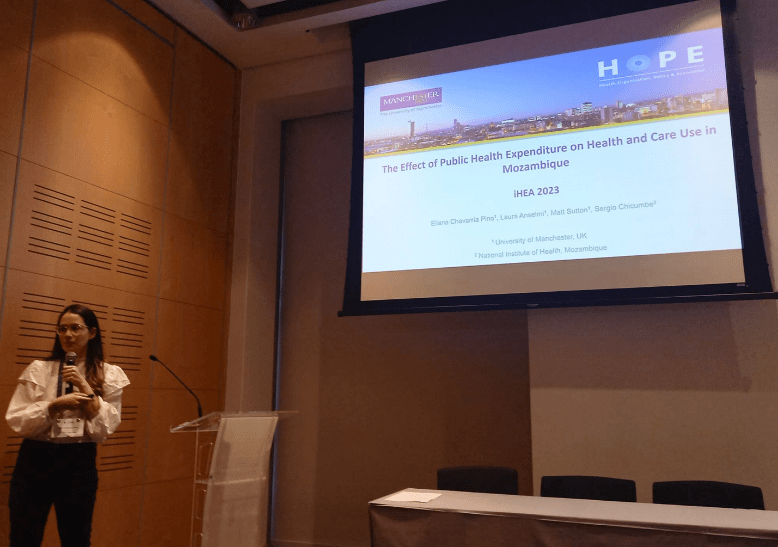
Eliana Chavarría Pino, Health & Wellbeing, University of Manchester (2021 Cohort)
This was a very productive, exciting and stimulating summer. Since late June I travelled to Maputo, the capital city of Mozambique, for a field research stay. My PhD aims to evaluate the effect of public health expenditure on child and maternal health and care outcomes using Mozambique as a case study. During the visit, I held meetings with colleagues at the Ministry of Health, the National Institute of Health, and key staff at development agencies and International organisations working in the health space. These meetings were extremely useful and valuable for my research. I had the opportunity to validate preliminary analysis and assumptions, gather feedback to inform further analyses, and collect the latest data. I also attended national workshops sharing descriptive statistics on the latest Household Budget Survey and discussing aspects of the functioning of the health system, such as actions to improve coordination in the response and delivery of health programmes and services. Through informal conversations with people, I also gained a deeper understanding of the healthcare system and accounts of perceptions of how it works. Walking in the city and a rural area I could also see some health centres from the outside.
Read More37th Annual Conference of the European Health Psychology Society – Bremen, Germany
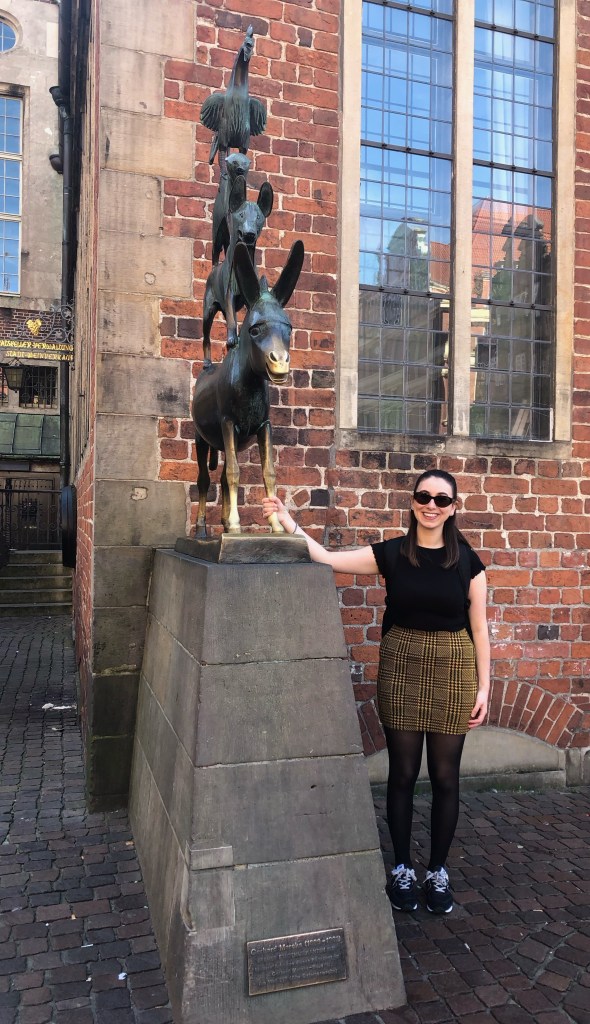
Rosanna Maletta, Psychology, University of Liverpool (2021 Cohort)
I recently wrote a blog post (see: https://nwssdtp.ac.uk/2023/08/08/my-first-conference-experience/) which allowed me to reflect on my first conference experience. So, when the NWSSDTP asked me to consider writing about my second conference experience I was happy to have an opportunity to reflect again on my experience. Within the second year of my PhD, I began disseminating my research findings at conferences. After already being accepted to speak at the Understanding Society conference, I thought it would be a great experience to also present work at a different conference. This time I decided to submit an abstract based upon my second piece of work. This work continues to use secondary data. However, this time the focus is on the changing prevalence of discrimination, mental health, and social inequalities within the UK between 2015-2020. My supervisor suggested applying to the 37th Annual Conference of the European Health Psychology Society (EHPS), as it had a focus on health inequalities this year. In addition, he knew some colleagues had submitted abstracts too. I was happy to find out I was accepted to give a 10-minute oral presentation and that my colleagues had also been accepted to speak. I knew my experience at this conference would be different in comparison to my first conference, both because this would be my first overseas conference (based in Bremen, Germany), and also because this time I would not be attending independently.
Read MorePresenting my research at EURO 2022 conference, in Espoo, Finland.

Ozioma Paul, Business & Management, University of Manchester (2021 Cohort)
One of the things I was very excited about when I started my Ph.D. in 2021 was the opportunity to present my research at conferences. My first major engagement in an international conference was in July 2022 where I presented my research at EURO 2022 conference, in Espoo, Finland. I had a few months before submitted an abstract which my presentation/talk was based on. In my second year, I decided to take it a notch higher and was encouraged greatly by both of my supervisors. We decided to submit a paper to another conference, GECCO 2023, Lisbon. It was a lot of work getting my experiments and the paper ready as the time frame I had before I submit was short. I made the deadline, but the paper came back with some recommendations. My supervisors then advised a rework and re-submission into another stream as a workshop paper rather than a full paper. This time, it was accepted!
Read More North West Social Science Doctoral Training Partnership