 North West Social Science Doctoral Training Partnership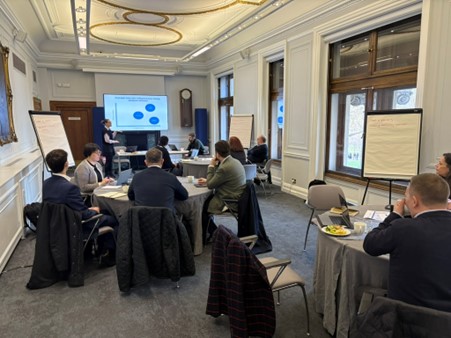
James Whitehurst, Health and Wellbeing, Keele University (2022 cohort)
Over the past three months I have been lucky enough to experience working in the civil service as a member of the “Open Innovation Team”. The Open Innovation Team (OIT) are an in-house consultancy who work with stakeholders and experts to inform policy through research and analysis. Overall, I enjoyed the fast-paced nature of civil service life and being exposed to direct policy through the expectations of our clients, who were policy teams in various government departments.
The past three months: Life as an intern
The main workload on the internship consisted of one main project throughout the three-month placement. I was a member of the research team from ‘design to delivery’, the client for this project was a team in Ministry of Housing, Communities and Local Government (MHCLG). In brief, this project acted in addition to the 2025 Construction Product Reform Green Paper, aiming to gain a better understanding of current construction project legislation and what stakeholders in the sector need to improve construction product safety. Overall, the project acted as a scoping report, referred to in the team as a ‘Rapid Review’; which can be used by the client team however they see fit in future policy decisions.
On reflection I quickly realised there’s a very different way of writing and structure of work. This included working on ‘slide decks’ that I have never had the opportunity to work on during my PhD. Most reports and slide decks are written using bullet points of primary information. Documents are edited in a way that the client should be able to understand the piece of work from titles and sub-titles only, without having to read further if they do not have time. I found this very interesting and having narrative in titles and sub-titles could be very useful in my own PhD thesis.
In addition to the main project, I took part in in designing stakeholder workshops, as well as and being part of workshop delivery on different projects (See photo). Outside of their policy work, the OIT delivers policy impact clinics for partner universities which is often delivered to students. I was tasked with designing part of the slide deck for a workshop delivered to students at the University of Lancaster, totally different to the project work I undertook but highlighted the different types of work that is expected.
Before this internship when I thought of parliament and policy, the first thing that comes to mind is the prime minister on a podium in front of the Union Jack; PMQs on a Wednesday lunch time; the scandals and ‘grilling’ of stakeholders during select committees. Yet there is so much more that goes into policy choice and design. So many opportunities and career paths one could take, so many great people doing great work that does not get seen or thought about by many outside of the workplace.
I thoroughly enjoyed my time on this placement, and I think, if like me, you are unsure about what you want to do after PhD completion, it is a great opportunity to experience something totally different to PhD research and academia.
Would I recommend it to other students? Training, learning from other PhDs and opportunities outside of academia
Overall, I thought the internship was a great opportunity to experience life outside of academia. The current struggles of academic life, including the well-known financial challenges universities face; the precarious employment contracts of many early career academics; and the constant pressure of publication, does not make academia a very appealing career path. I therefore used this opportunity to explore possible career opportunities, which I would recommend anyone to do if, like me, you are unsure on exactly the career path you would like to explore following PhD completion.
Secondly, meeting other PhD students and learning about their research projects was an enjoyable part of the internship program. There were students from a range of universities, undertaking various projects from a wide range of subjects. I found it very useful and fun to listen to others (including their PhD experience, future career ideas and their overall university experience), as well as share my own research.
Finally, I would recommend the program due to the training opportunities provided by the OIT. We had numerous training sessions ran by the team on a range of topics (including interviewing; civil service writing style; and careers). We were also given access to “Civil Service Learning” to engage with in our spare time when we had spare time outside of our workload. Although I did not find Civil Service Learning as engaging as face-to-face sessions, coming from a non-policy background the platform provides basic information around the inner workings of government and the structures of policy delivery through the civil service and parliament. Which was invaluable having never working in policy or government before.
 North West Social Science Doctoral Training Partnership
Nice post, thanks !
LikeLike