 North West Social Science Doctoral Training Partnership
Ragnhild Nordset, Business & Management, University of Liverpool (2020 Cohort)
What are your beliefs?
What you believe about the world impacts what you choose to see in it, how you choose to frame that and how you deal with (or not) the elements you exclude. As PhD researchers we are responsible for the lens that we use to navigate our noisy world which, aside from being a skill, is also a moral task. It matters that we question what underpins and drives our choices and what we believe to be true of the world we inhabit. “Do your research”, they say and I wonder what people believe that means? How many decisions have you already blindly made based on your underlying assumptions before you even start doing actual research?
Us PhD researchers have to keep these questions in mind throughout our journey, starting with getting to grips with ontology and epistemology. Ontology and epistemology are both big words with the power to stop most PhD students in their tracks. They are respectively what we believe to be true about the world, how we function within it, and what is worth knowing about this world. These beliefs influence or choice of methodology and research design. Interestingly enough, we don’t all see the world in the same way, we don’t all value the same things, and often we are not fully aware why. Ontology can seem elusive at times. Not only is it rarely explicit in the work we read and draw inspiration from, but our own ontology can feel hidden from us. Likewise with epistemology as the contours to knowledge and of knowing is not as clear cut as some may allude to. Do we all really know how we see the world and what assumptions about it are?
Both ontology and epistemology have always intrigued and interested me and one of the early inspirations came from Ann Cunliffe and her article on The Philosopher Leader where she went deep into the caves of phenomenology. It left a resonance in me; it woke something up that has weaved through my work ever since. I have been lucky enough to join Ann in conversation on occasions and I am sure you can imagine my excitement when she invited me to join her in a 3 day workshop on these very subjects!
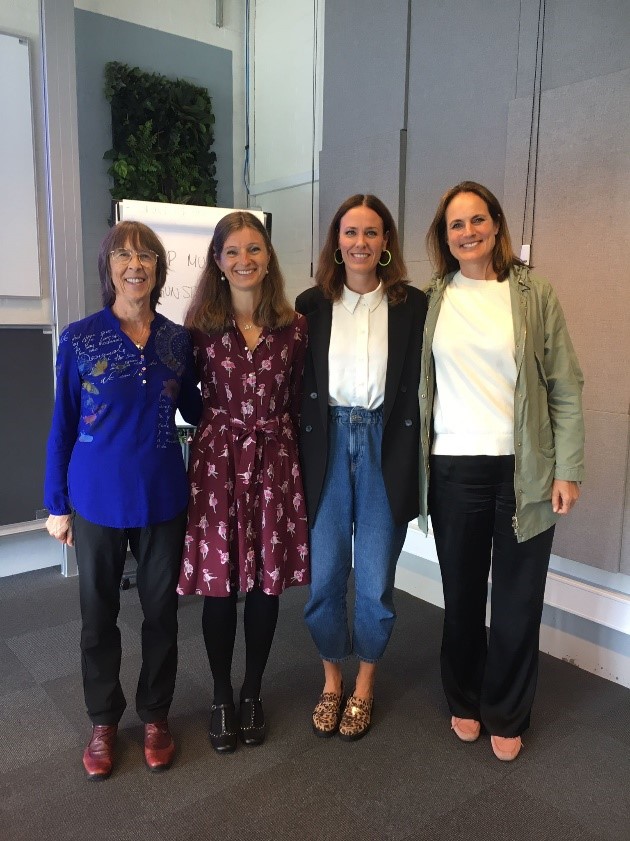
Lead by Ann herself and curated by the wonderful Mette Vinther Larsen and Jenny Helin, we were dropped right in the deep end having to argue whether we were of an objectivist or subjectivist world view. Why had we chosen our specific methodology, what agenda was behind the design and what intention drove our research question(s)? Not surprisingly, it all came back to ontology. The conversations and discussion were flowing and never before have I experienced a room of hugely diverse world views come together with such openness and humility. We discussed our differences and our similarities and considered the barriers that so often exists between objectivist and subjectivist thinkers. Once we were relatively aware of where we stood, what could we have to offer each other? It felt freeing.
We were encouraged to work reflexively and truly question the nature of our work and thinking. Whilst reflection asks you to step back and apply reason and logic to the world, reflexivity requires that we accept that we cannot fully take ourselves out of the world. As in, we are never able to be neutral and our lived experience will colour our interpretation of our world regardless of how logical we believe ourselves to be. During the course Ann, Jenny and Mette took us backstage to their personal experiences with theorizing and talked of the chaos they have had to think and feel their way through in order to create something with the ability to resonate with others in the world. When we arrived at the third and last day something had happened; by openly breaking down our beliefs and coming together in conversation about the differences, a sense of belonging between us had emerged. The landscape was now vaster, richer and in learning to know what others accept as true it had become clearer to me what I myself actually believe about the world we exist within. I am truly grateful to Ann, Mette and Jenny for inviting me to think with others this way.
“What helps enormously in our attempts to know our own minds is, surprisingly, the presence of another mind” (Alain de Botton)
 North West Social Science Doctoral Training Partnership