 North West Social Science Doctoral Training Partnership
The Development and Humanitarianism pathway brings together complementary sets of interdisciplinary collaboration, spanning not only social sciences but also medical and environmental science.
Programmes eligible for NWSSDTP funding
The list below includes all Master’s programmes that are eligible for NWSSDTP funding and the typical PhD programmes that are supported under this pathway. Other PhD programmes within these universities may be considered – please reach out to the relevant Pathway Representative (see contact details below) or the NWSSDTP Office if the PhD programme you are interested in is not listed here. Please note that the NWSSDTP does not fund standalone Master’s programmes – these can only be funded as part of a Master’s + PhD Studentship.
Lancaster University
University of Liverpool
- MA Researching Crisis and Change in Human Geography
- PhD Sociology and Social Policy
- PhD Geography
- PhD Management
- PhD Communication and Media
University of Manchester
- MSc Research Methods with International Development
- MSc Environmental Governance
- MA Digital Media, Culture and Society
- PhD Humanitarianism and Conflict Response
- PhD Development Policy and Management
- PhD Development Studies
- PhD Development Studies (Development Economics)
- PhD Digital Humanities, Cultures and Media
- PhD Art and Social Practice
For information on how to apply for funding, please visit our How to Apply page.
Pathway Representatives
Contact details for Development and Humanitarianism Pathway Representatives can be found here: https://nwssdtp.ac.uk/about/contact-us/pathway-leads/.
Current Development and Humanitarianism Pathway Students and Alumni

Jack Hemingway (2018 Cohort)
- Lancaster University
- Weblink: https://www.linkedin.com/in/jack-hemingway-5b1997101
- Email: j.hemingway@lancaster.ac.uk
Groundwater Governance in South Africa: Domestic and Transboundary Governance, and Preparedness for Hydraulic Fracturing
The project will be exploring the groundwater governance arrangements of South Africa, particularly surrounding the developing unconventional oil and gas industry in the country. Using the ecologically pristine Karoo region as a study site, an evaluation of the institutional preparedness for hydraulic fracturing will be conducted, focussing on legislation, policy, stakeholders, and knowledge, information and science.
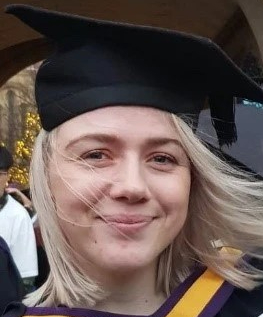
Anna Thurlbeck (2020 Cohort)
- University of Manchester
- Email: anna.thurlbeck@manchester.ac.uk
To what extent do ideational and socio-political factors become embedded in formal fiscal federal institutions over time and how do these factors shape distributive outcomes?
This research project will examine the present allocation of federal revenue amongst states in Nigeria with the main objective being the analysis of the socio-political and historical forces underlying the fiscal federalist system and the degree to which these forces shape formal redistributive processes.

Laila Zulkaphil (2022 Cohort)
- University of Manchester
- Email: laila.zulkaphil@postgrad.manchester.ac.uk
Innovative Financing for Humanitarian Aid: Implications of Using Impacts Bonds for Humanitarian Actions
In the context of an increasing humanitarian funding gap, Laila’s research examines impact bonds as an innovative humanitarian financing mechanism. Theoretically, the research analyses how the use of such impact investing affects the meaning of humanitarianism as well as humanitarian principles and ethics. Practically, the research explores whether and under what circumstances impact bonds are suitable for financing humanitarian actions.

Cara Westerberg Mattu (2021 Cohort)
- University of Liverpool
- Weblink: https://www.linkedin.com/in/cara-mattu-48761b18b/
- Email: sgcmattu@liverpool.ac.uk
Indigenous Future-making Versus the Westminster-modelled State: Exploring the Joys, Pains, and Dreams of Maya Women and Youth (on their terms)
My research will raise awareness of realities lived by Maya women and youth residing in the Toledo District, southern Belize, on their terms, by casting light on institutional barriers they face vis-à-vis pursuing Maya definitions of health, wellbeing, and autonomy. I aim to highlight the political agency of women and youth by illustrating their joys, dreams, and struggles via a desire-based research design that includes creative ethnographic-style community-based participatory action research practice.

Natalie York (2022 Cohort)
- University of Manchester
- Weblink: https://www.linkedin.com/in/natalie-york-23075912b/
- Email: Natalie.york@manchester.ac.uk
Can biocultural diversity improve conservation outcomes for people and nature? A case study of central Kenya’s conservation landscape.
My research explores how different conservation approaches across central Kenya incorporate biocultural diversity protection, including the challenges and opportunities that different conservation spaces create for biocultural diversity, and how integrating biocultural diversity into conservation can contribute to achieving global conservation outcomes. My project collaborates with the Inclusive Conservation Initiative being rolled out by IMPACT in central Kenya.
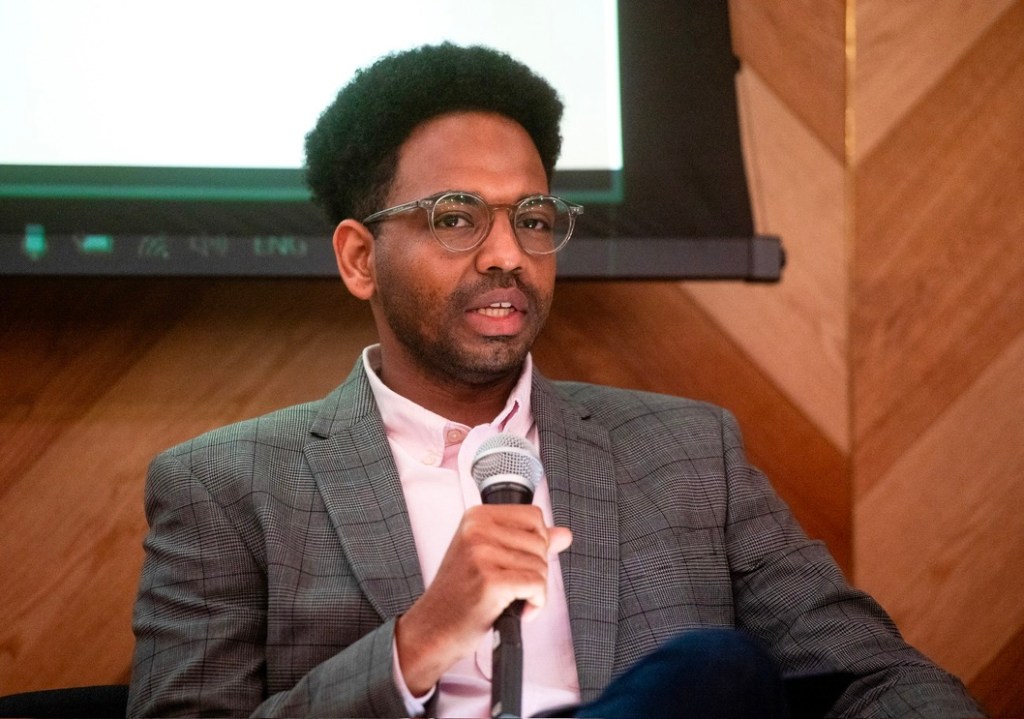
Hamid Khalafallah (2023 Cohort)
- University of Manchester
- Weblink: https://www.linkedin.com/in/hamid-khalafallah/
- Email: hamid.khalafallah@postgrad.manchester.ac.uk
Political Transitions in Africa: The Quest for Democratic Governance, and the Role of Grassroots Movements in Sudan
My research investigates the trajectories of recent political transitions in Africa, with a focus on Sudan, and the roles played by pro-democracy grassroots movements in instigating and shaping political transitions the course of pursuing democratic governance. My research also explores the incremental political change that grassroots movements trigger on the grassroots level during political transitions, rather than normative structural changes.
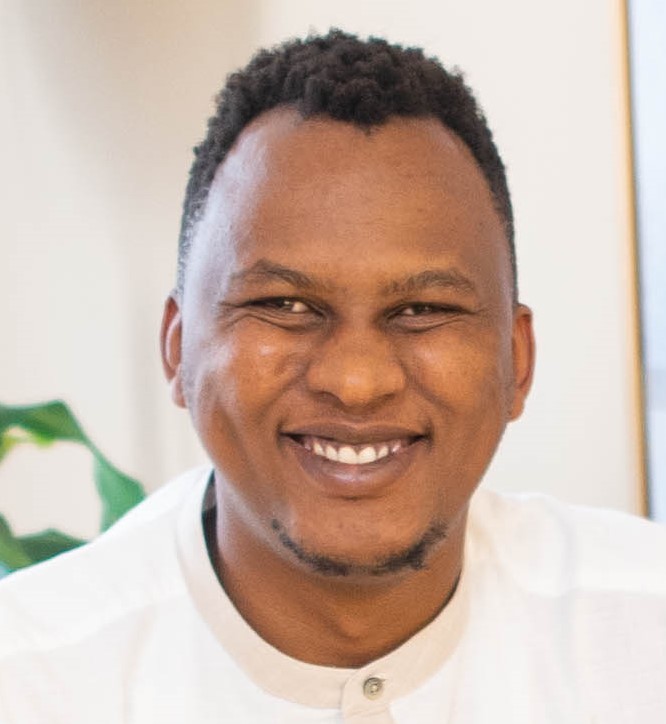
Kibui Edwin Rwigi (2023 Cohort)
- University of Manchester
- Weblink: https://research.manchester.ac.uk/en/persons/edwin-rwigi
- Email: edwin.rwigi@postgrad.manchester.ac.uk
Co-producing Pro-poor Water Services in the Mathare Informal Settlement, Nairobi: A Critical Review
I am examining why water equity challenges persist in informal settlements in African cities, focusing on Nairobi’s Mathare area, despite decades of co-produced water interventions. I’m exploring socio-political dynamics shaping water provision, limitations of current co-production models, and formal-informal interfaces in service delivery. My research seeks to deepen understanding of urban governance and advance strategies for improving urban services.

Margot Tudor (2017 Cohort)
- Formerly University of Manchester
- Weblink: https://margottudor.wordpress.com/
- Email: M.Tudor@exeter.ac.uk
Blue Helmet Bureaucracy: Peacekeeping as Colonial Ambition, a Lesson in Governance, and the Exploitation of ‘Humanitarianism’
This project historicised United Nations peacekeeping interventions in post-colonial contexts. It investigated how these missions provided legitimate environments for UN staff to direct the design of sovereignty in newly independent or decolonising territories. It challenged the concept of the UN as a homogenous humanitarian agency and demonstrated the divisive organisational anxieties bound up in the development of the post-colonial international order.

Jackline Wanyonyi (2023
- University of Manchester
- Weblink: Jackline Wanyonyi | LinkedIn
- Email: jackline.wanyonyi@postgrad.manchester.ac.uk
The Urban Governance of Protracted Displacement in Cities
My research investigates how cities are responding to protracted displacement and reimagining the “sanctuary city” concept across both Global North and South contexts. Through a cross-cutting approach that bridges research, policy, and practice, I aim to contribute to academic debates on forced displacement and migration governance, while generating inclusive, evidence-based insights to inform urban development policy and practice.
 North West Social Science Doctoral Training Partnership