 North West Social Science Doctoral Training Partnership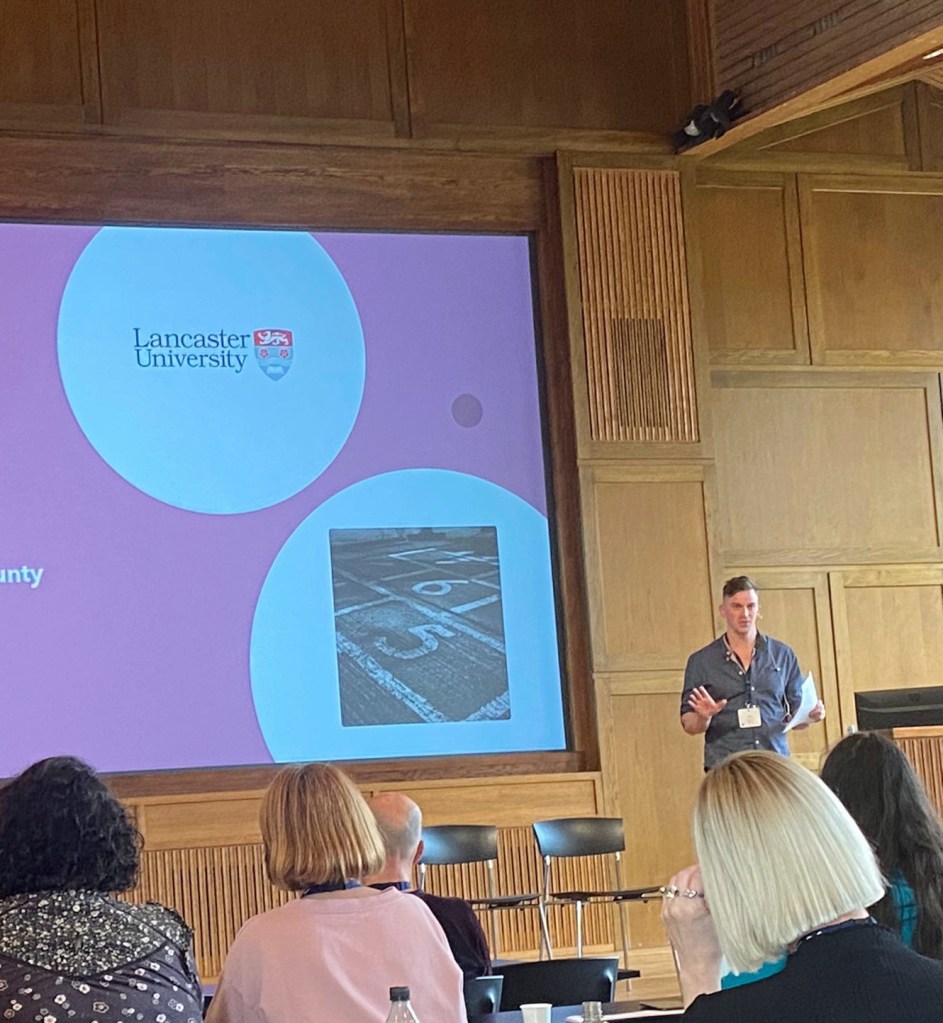
Luke Parkinson, CSPSW, Lancaster University (2021 Cohort)
After speaking with other PhD students about our conference experiences, I decided to write this blog. Instead of writing about my research directly, I want to acknowledge and share the difficult experience of undertaking a professional activity for the first time through the everyday story of attending my first conference in September 2023. Anxiety around conference presenting is sometimes reduced to the idea of stage fright and public speaking. Although this resonated with me, several other challenges came before and during the conference. Conference presentations, at least for me, are not a straightforward and linear task, just as my research has so far proved not to be.
In my discipline, criminology, we talk a lot about ‘insiders’ and ‘outsiders’. My first conference was a key transitionary phase for me. In retrospect it seems like the first step that began to move me from a resigned ‘outsider’ position and begin a tentative shuffle toward the ‘insider’ position. Having been struck by an unusual bolt of self-confidence one afternoon, I’d decided that I wanted to attend and present at an international conference. What better way to really try to consolidate my project than to have to explain it within ten to fifteen minutes on a stage in front of an audience of peers, academics and world-renowned researchers?
Of course, as the conference date crept closer, my self-confidence bolt had redispersed itself into a kind of objectless anxiety that left me utterly convinced I was a complete imposter and that perhaps the only reason I had been allowed to present was some kind of administrative error or oversight. Despite suffering from this, alongside a growing feeling of existential dread, I was determined to prove myself wrong and follow my initial hope that presenting would help me bring together my somewhat chaotic first year into a feasible project.
In the week before the conference, I made use of PowerPoint’s recording function to practice my timing. I tried to calm my stage nerves by booking empty lecture theatres and passionately explaining my disorganised ideas to the empty seats. I edited, chopped, changed and uncovered gaps and flaws in my reasoning and analysis. By the time the date came around, I not only knew what I would say but was almost convinced that I knew what I was talking about.
I landed in Copenhagen the night before the first day of the conference. The streets were empty as I wandered through the night, looking for my hotel. When I arrived, the city seemed to have a distinctly dream-like quality, which seemed appropriate for the European Society for Social Drug (ESSD) Research conference. I met another PhD researcher on my flight, and we agreed to meet the following day before walking into the conference together. Even though it was a brief conversation, I was really grateful to know someone before the conference started.
The next few days were a whirlwind. I listened in awe as researchers from around the world spoke about their projects and debated topics. How exactly could cannabis legalisation in Germany unfold? What was it like to follow magic mushroom pickers in the South East of England? Could drug testing kits reduce harm at nightclubs? What is CBD, and why is it so popular? What is the history of drug use in the Soviet Union? What exactly happens in a psychedelic retreat, and who attends it?
At the end of the first day, a resident gave us a tour around Christiania. The city’s section houses a commune created in the 1970s and is a stronghold of free thinking and community. Inside is also the famous ‘Pusher Street’, where cannabis is sold openly although still technically illegal. I made the mistake of taking a photograph and was told by the people who worked in the street, in very firm terms, that I would need to delete my photo. Later, we went to dinner, and I had the opportunity to talk with people whose names I had seen in so many books and articles over the course of my reading in the first year of my PhD.
I had been dreading the dinner for weeks before the conference. Dinner parties as a formal social function are a completely alien concept in my biography. They often seemed to me like something other people enjoyed, whereas my goal was always to survive until the end of anything designated as a dinner party. Fortunately, everyone was incredibly friendly, making the experience far more manageable than my anxious brain could have imagined.
Eventually, it was my turn to speak. I remember thinking my main worry was whether the microphone would clip onto my shirt. Somehow, I became quite fixated on this and took the time to ask other presenters how they had handled this daunting task. However, once it was in place, the talk went faster than I anticipated. Before I knew it, it was my second-to-last slide, and I was told that I only had two minutes left. Then, it was over; I’d explained my initial research and discussed my project, and no disasters had occurred. There was some clapping, questions and the distinct feeling of a reasonably heavy weight being lifted off my shoulders.
The conference turned out to be the highlight of my PhD so far. The ESSD prides itself on being friendly to early-career researchers, and I couldn’t recommend it more highly. The topics were fascinating, and the speakers and attendees were approachable and welcoming. They really took the time to give supportive and valuable feedback to all the speakers.
In between all of this, I experienced, for the first time, the privilege of travelling internationally for work. I was in a ‘destination’, but I was there to talk about my project. I felt incredibly lucky and thankful I was able to do this. Like the dinner party, it had always seemed like something meant for other people and not for me. I felt fortunate to be in Copenhagen, and I’m very grateful to the NWSSDTP for supporting me in attending the conference through the Research Training Support Grant.
The best thing about the conference was that it reminded me why I’d signed up for my PhD. I returned home with something much more important than the accolade of speaking at my first conference. It reinjected enthusiasm for my research, allowed me to centre my project in my mind, and gave me a glimpse of a possible future. I watched presentations from people doing what I wanted to do, which was researching exciting and important topics that could deepen understanding and influence policy around a subject still mired in taboos and public anxieties. I faced my fears about presenting and moved slightly away from the ‘outsider’ position I’d felt as a first year PhD student.
 North West Social Science Doctoral Training Partnership
I’ve just had my abstract accepted for the European Alzheimer Conference in Geneva in October, so very much enjoyed the insights from your blog Luke – so thank you!
LikeLike
Hi Rita, thank you for leaving a comment! I’m really glad it was helpful and good luck for the conference in October!
LikeLike