 North West Social Science Doctoral Training Partnership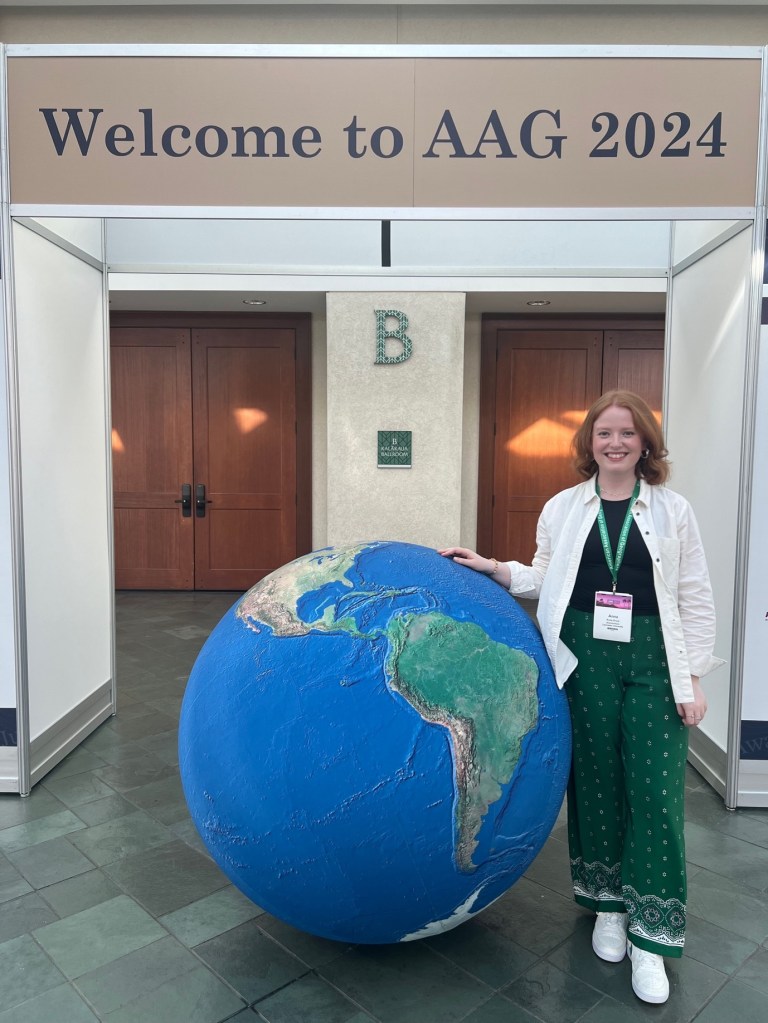
Anna Drury, Economic and Social History, Lancaster University (2023 Cohort)
Last month, I was incredibly fortunate to spend just over a week in Honolulu, Hawaii, both attending and presenting a paper at the 2024 American Association of Geographers (AAG) Annual Meeting.
This once in a lifetime trip came about last November, when I spotted a Call for Papers advertised by the Decolonising Lancaster University network, from Maria Jesus Alfaro-Simmonds (University of Huddersfield) and Natan Waintrub (Center for Sustainable Urban Development, Pontificia Universidad Católica de Chile). Together, they were organising the session ‘Being Vulnerable in Latin American Cities’, to feature at AAG 2024, and they were seeking paper abstracts to feature in their session. I was instantly keen to submit an abstract to Maria and Natan, given how well suited my thesis project was to their session and its themes, most notably the current and historical challenges that shape dynamics of urban (ex)inclusion in Latin America.
My thesis project ‘Putafeminismo: Sex Work, Agency, and Afterlives of Sexual Slavery in Brazil’ historicises the Brazilian variation of putafeminismo – a modern-day feminism, created by sex workers across Lusophone and Hispanic cultures, that challenges hegemonic narratives about the sale of sex. As a word, puta, with its most recognised translation being the English word whore, is most commonly used as a derogatory term to shame and stigmatise especially feminine subjects. Many sex worker activists in Latin America, including Brazilian putafeministas, have taken up puta in an effort to reappropriate the term’s significance, and refuse the estigma (stigma) that is inherently associated with the term. Key principles of the putafeminismo movement in Brazil include “trabalho sexual é trabalho”, which, when translated, means “sex work is work”, and declaring they are “against stigma and discrimination”, which in Portuguese translates as “contra o estigma e a discriminação”. As noted by Juana María Rodríguez, sex work is rarely framed as ‘an expression of corporeal autonomy, sexual freedom, or promising commercial opportunism… sex workers are always seen as a stigmatized population that must be identified in order to be criminalized, controlled, or disappeared’ (2023, 8).
Within my paper abstract, I highlighted how the current and historical challenges that shape dynamics of urban (ex)inclusion in Latin America could be critically addressed, through an exploration of Brazilian putafeminismo. I discussed some of the racialised, gendered, and sexualised spaces in Brazil, in which sex workers are regarded as a stigmatised population, and how this informs our understanding of what it means to be vulnerable in Latin American cities. I also signalled to some of the strategies and practices being adopted by Brazilian putafeministas, who are involved in shaping current cities; most notably Rio de Janeiro in Brazil; through countering their vulnerability as urban actors, by demanding place within urban spaces as equal; unstigmatized; legitimate citizens.
When the email came through saying my abstract had been accepted, I was over the moon! To help fund my trip to Honolulu, I applied in advance to the NWSSDTP for funding towards conference attendance, through the Research Training Support Grant. With this type of application, I provided the DTP with details of the conference, a brief statement about why the conference was relevant for my research project and personal development, my accepted abstract for my paper, and an indicative costing for attendance. I was absolutely delighted when I found out my application had been successful – it was now time to start booking my trip!

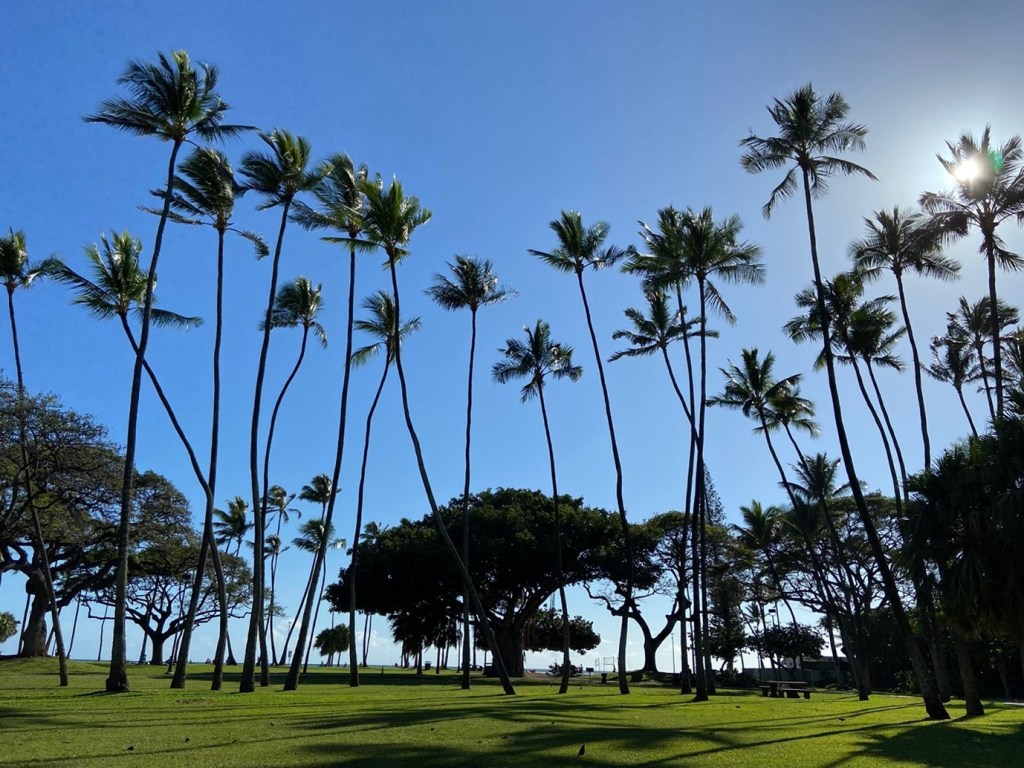
Three flights, two oceans, and one overnight layover later, I arrived at Daniel K. Inouye International Airport in Honolulu! Honolulu is located on the island O‘ahu, one of the eight main Hawaiian Islands. With breath-taking scenery and gorgeous weather, it was a very special location for the conference to take place. Nearly 3,800 people from various disciplinary backgrounds gathered at the Hawaii Convention Center for the AAG Annual Meeting! I attended a wide variety of sessions, from ‘Material Culture and Geography’ to ‘Queer Inconveniences: Tensions in Sexualities and Gender Research, Politics, and Communities’. My paper was really well received, and I thoroughly enjoyed the discussion segment with my fellow speakers and members of the audience. I forged some wonderful connections with PhDs and ECRs from around the world, two of whom I have a Zoom call with in the next couple of weeks to discuss possible future collaborative projects!

On the whole, the experience of attending my first international academic conference was awesome! I would really encourage you to submit an abstract to any and all conferences that pique your interest, and not to worry about whether you’ll “belong” in terms of your disciplinary background – as a historian, I found that through participating in an interdisciplinary conference like the AAG Annual Meeting, I was able to have some of the most fruitful discussions related to my thesis project to date.
 North West Social Science Doctoral Training Partnership